


Starting yoga can feel like learning a new language. The poses, the breathing, the Sanskrit names: it is easy to feel lost. This 15-minute daily routine strips away the complexity. It focuses on simple, foundational movements that improve mobility and help you reconnect with your body.
No special gear is needed. A clear floor space and comfortable clothes are enough. The sequence works for people who sit for hours, those recovering from stiffness, or anyone seeking a gentle morning movement practice.
Think of this routine as an introduction, not a performance. Each pose can be modified to meet you where you are. The only requirement is showing up and breathing. After a few sessions, many people notice daily tasks feel lighter and their body moves freely.
Breathe Through Your Nose
Breathe through your nose, in and out, letting the belly move rather than the chest. If you cannot breathe smoothly in a pose, the pose is too much right now.
Make Every Pose Smaller
Make every pose smaller: bend the knees in the fold, drop to your knees in Dog, hold a wall in Tree.
Same Time Every Day
Same time every day: fifteen minutes daily beats an hour on Sunday, because mobility responds to frequency.
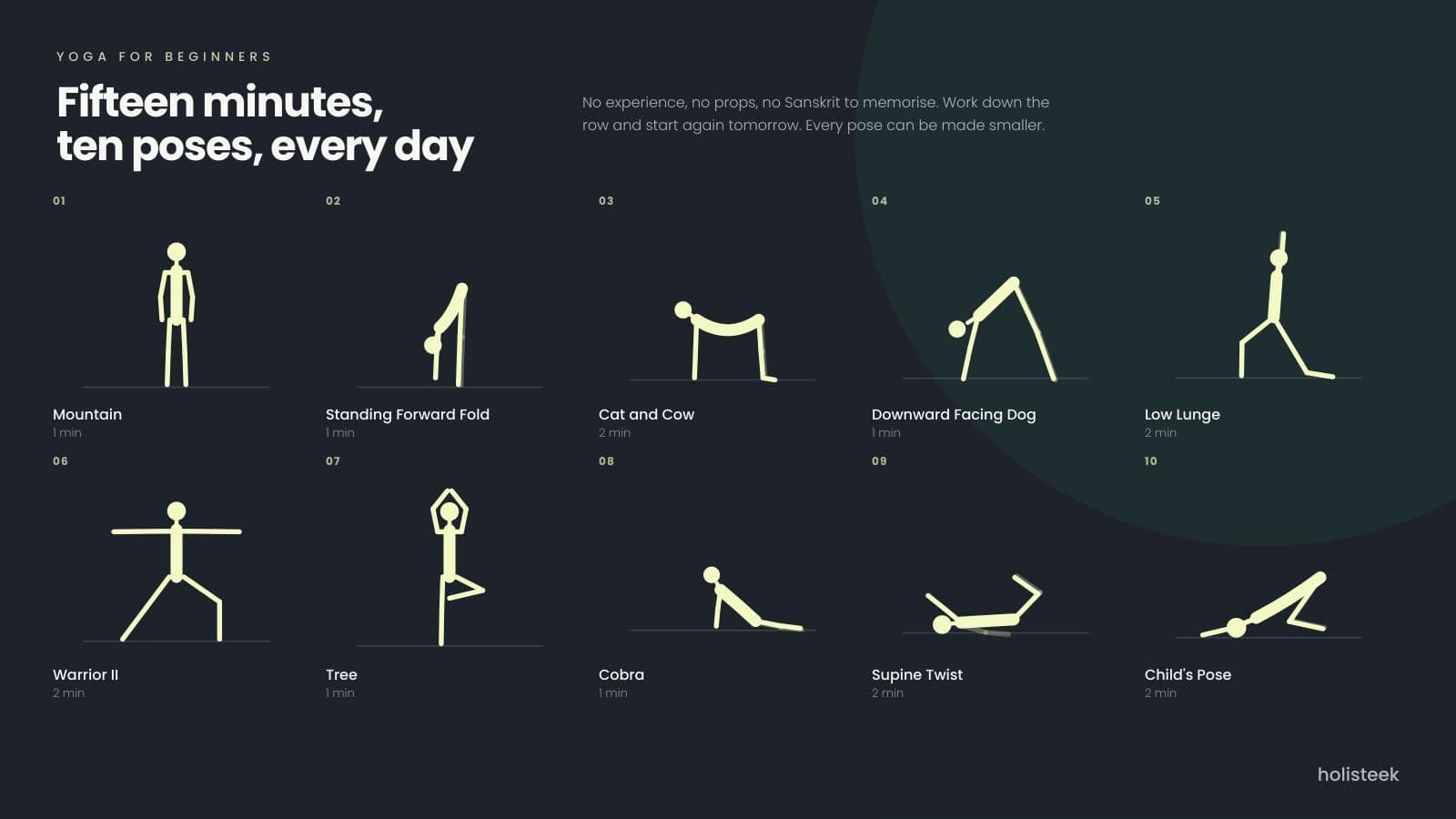
10 Essential poses for your first 15-minute flow
Effort is fine, sharp pain is not. Stretching feels like a broad pull that eases as you stay in it. Pain is sharp, local, and gets worse the longer you hold.
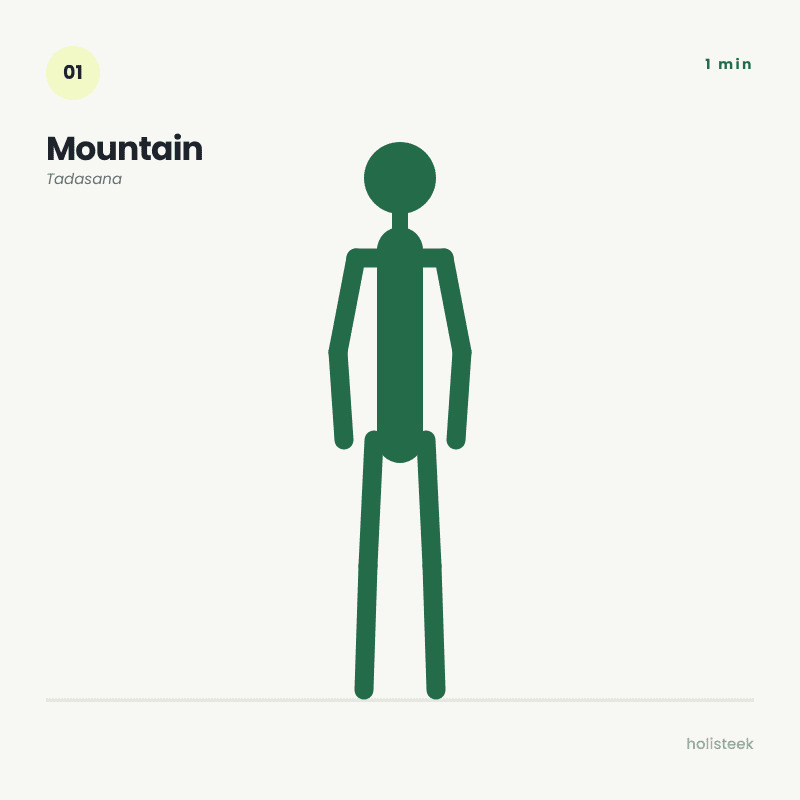
Mountain Pose (Tadasana)
Mountain Pose (Tadasana)
Start with Mountain Pose to ground your feet and find neutral alignment. Hold for 1 minute while taking slow, steady breaths.
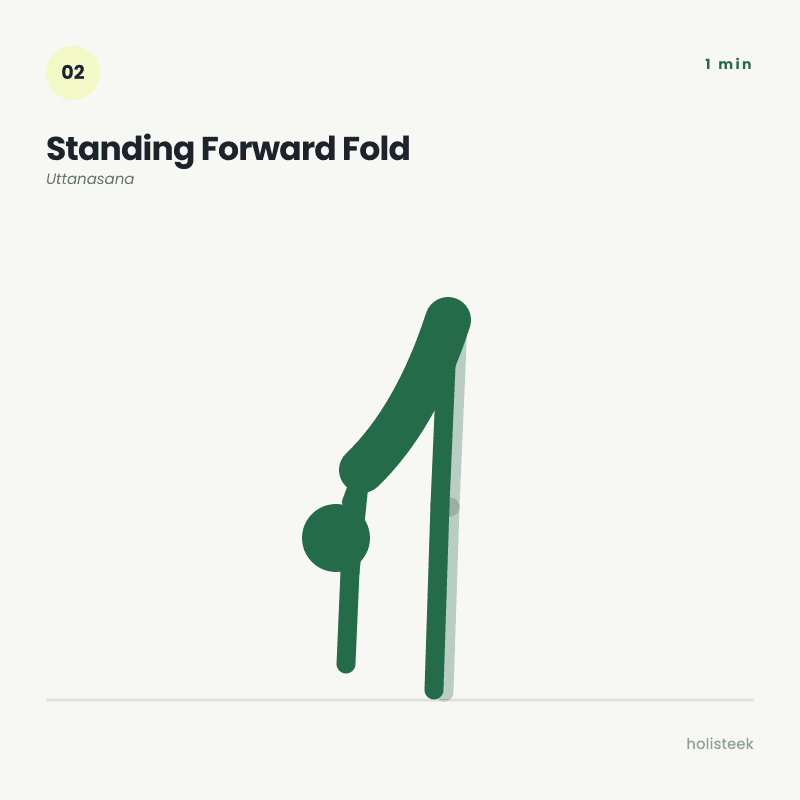
Standing Forward Fold (Uttanasana)
Standing Forward Fold (Uttanasana)
Hinge from your hips with soft knees, letting your head hang heavy to release the lower back and hamstrings for 1 minute.
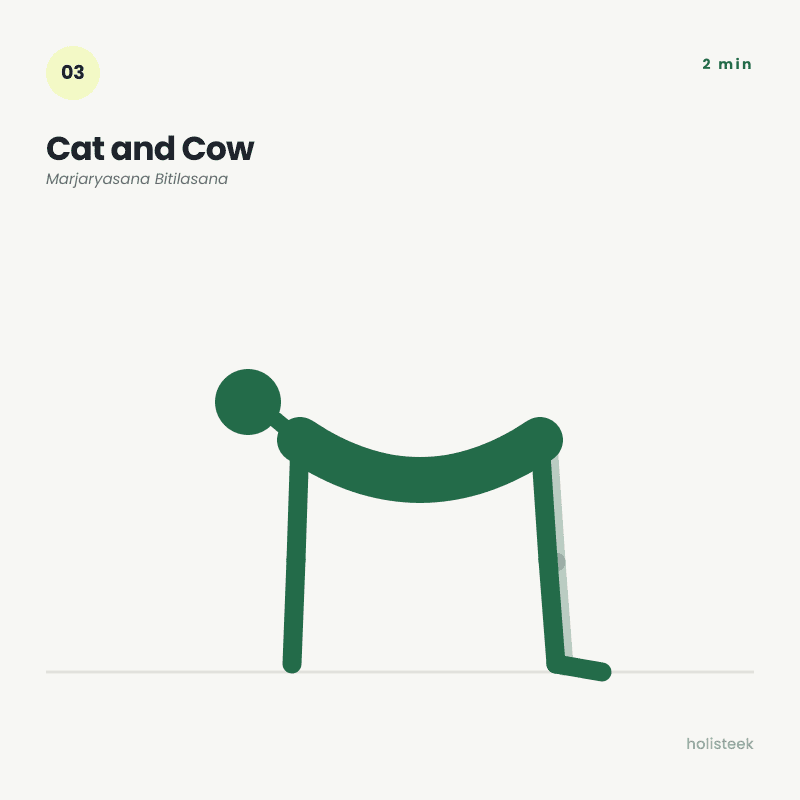
Cat-Cow Pose (Marjaryasana-Bitilasana)
Cat-Cow Pose (Marjaryasana-Bitilasana)
Move onto hands and knees to alternate between arching and rounding the back, coordinating breath with spinal mobility for 2 minutes.
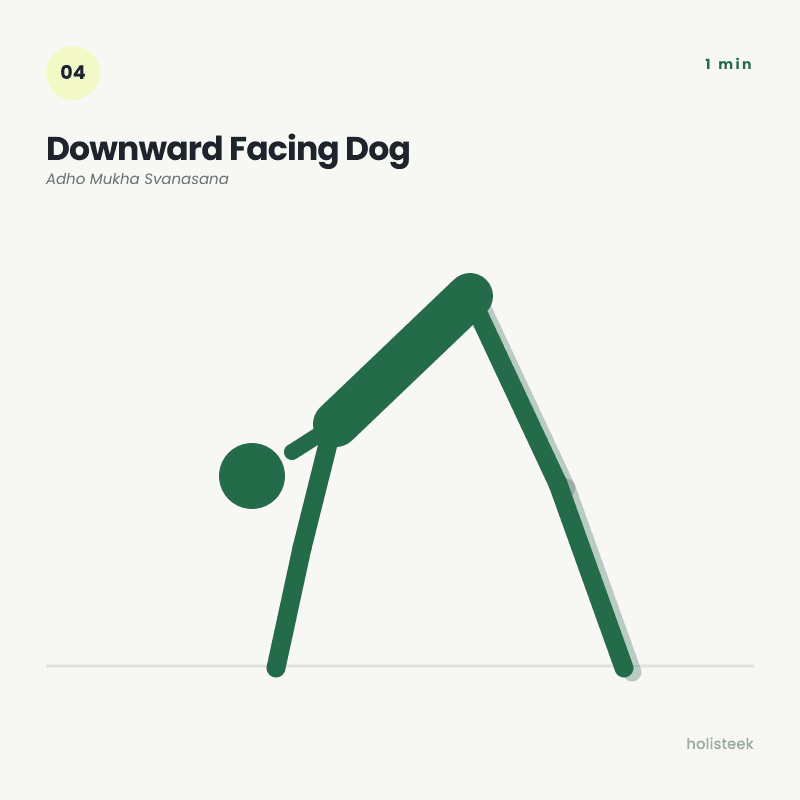
Downward-Facing Dog (Adho Mukha Svanasana)
Downward-Facing Dog (Adho Mukha Svanasana)
Move into Downward-Facing Dog, pedaling the legs gently to warm up the hamstrings. Hold for 1 to 2 minutes.
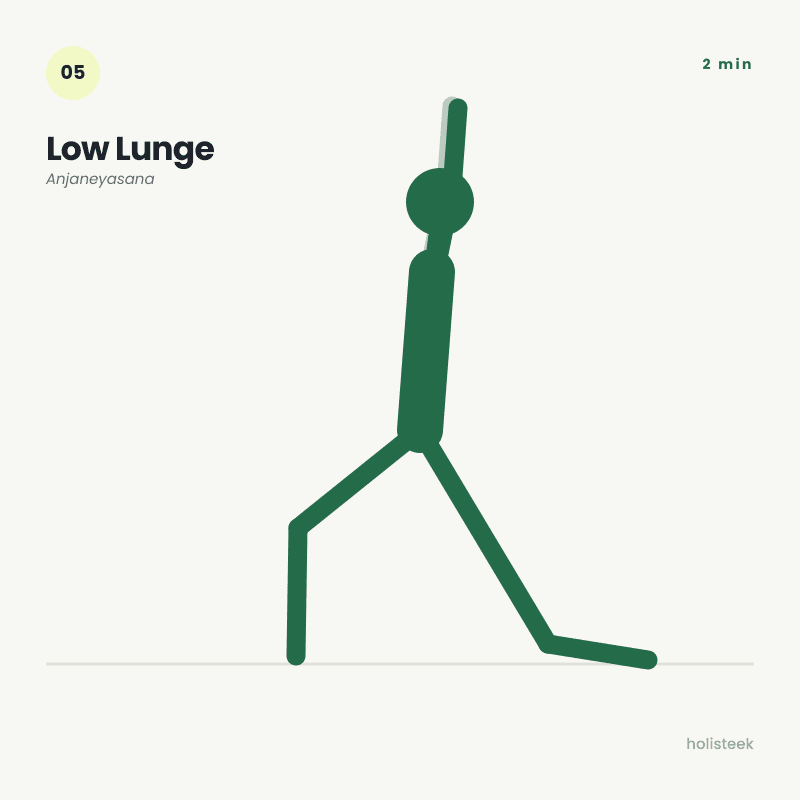
Low Lunge (Anjaneyasana)
Low Lunge (Anjaneyasana)
Step one foot between your hands, resting the back knee to open the hip flexors. Hold for 1 minute on each side.
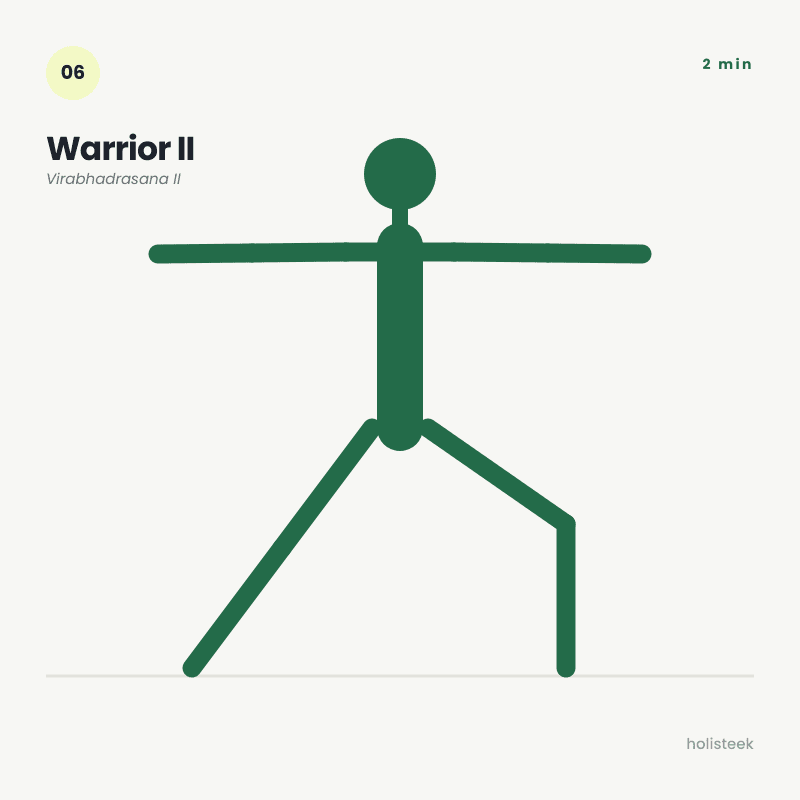
Warrior II (Virabhadrasana II)
Warrior II (Virabhadrasana II)
Step wide with your front knee bent over the ankle and arms extended parallel to the floor. Hold for 1 minute on each side.
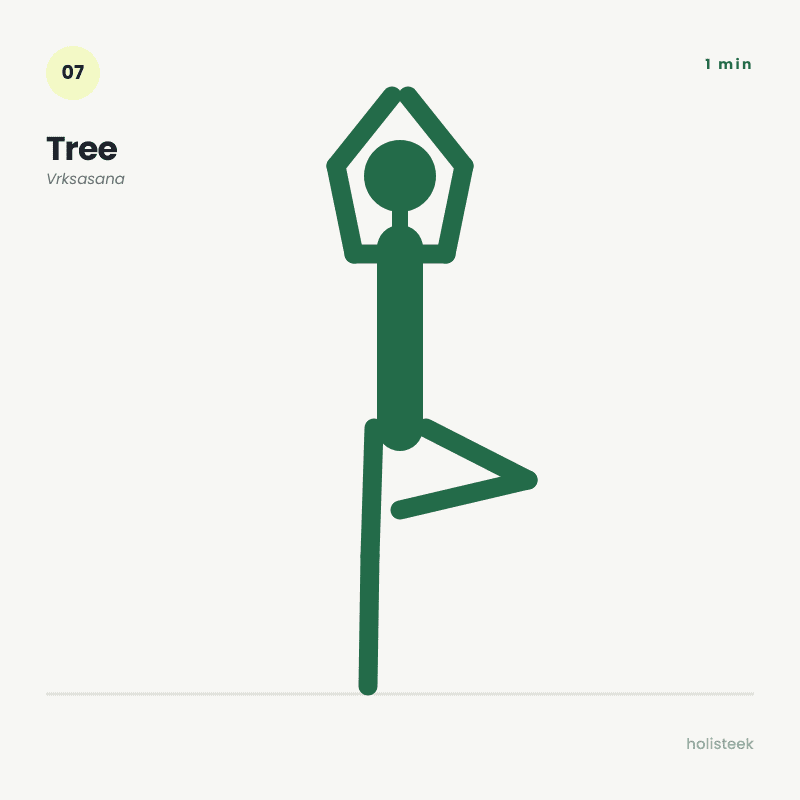
Tree Pose (Vrksasana)
Tree Pose (Vrksasana)
Transition to Tree Pose for balance. Hold for thirty seconds on each side. Place the foot on the calf or the inner thigh, never on the side of the knee. Standing next to a wall is not cheating.
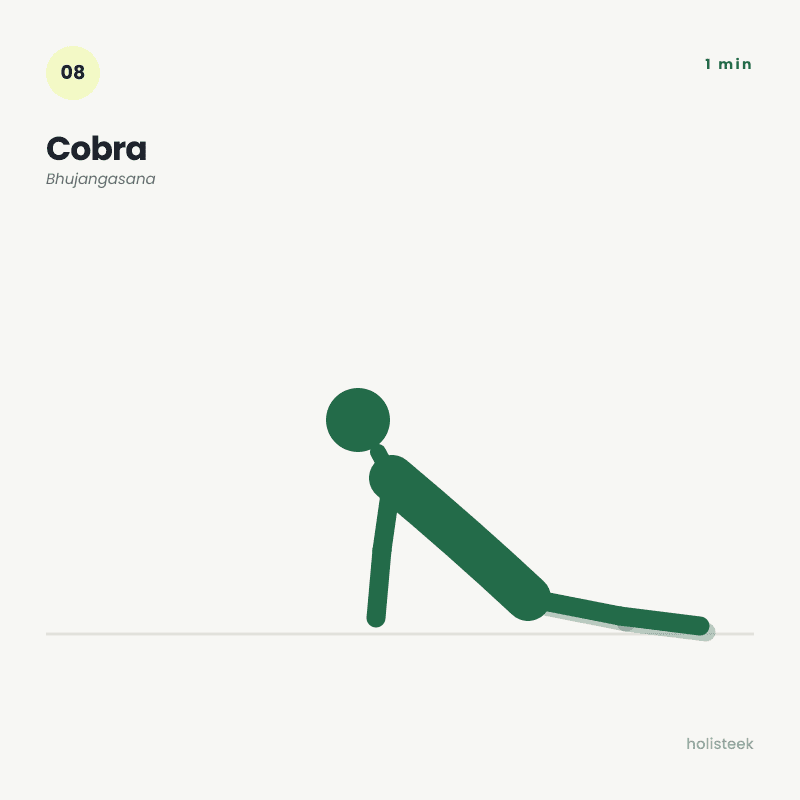
Cobra Pose (Bhujangasana)
Cobra Pose (Bhujangasana)
Lower to the mat for Cobra, pressing lightly into the hands while keeping the elbows hugged in. Hold for 1 minute.
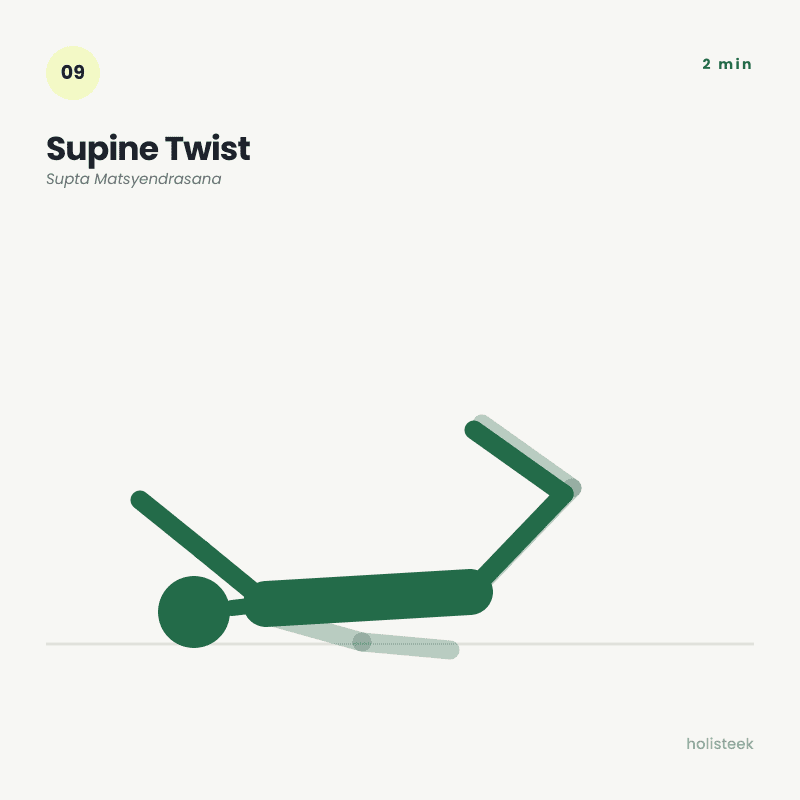
Supine Spinal Twist (Supta Matsyendrasana)
Supine Spinal Twist (Supta Matsyendrasana)
Lie on your back and let your bent knees drop gently to one side to release spinal tension. Hold for 1 minute per side.
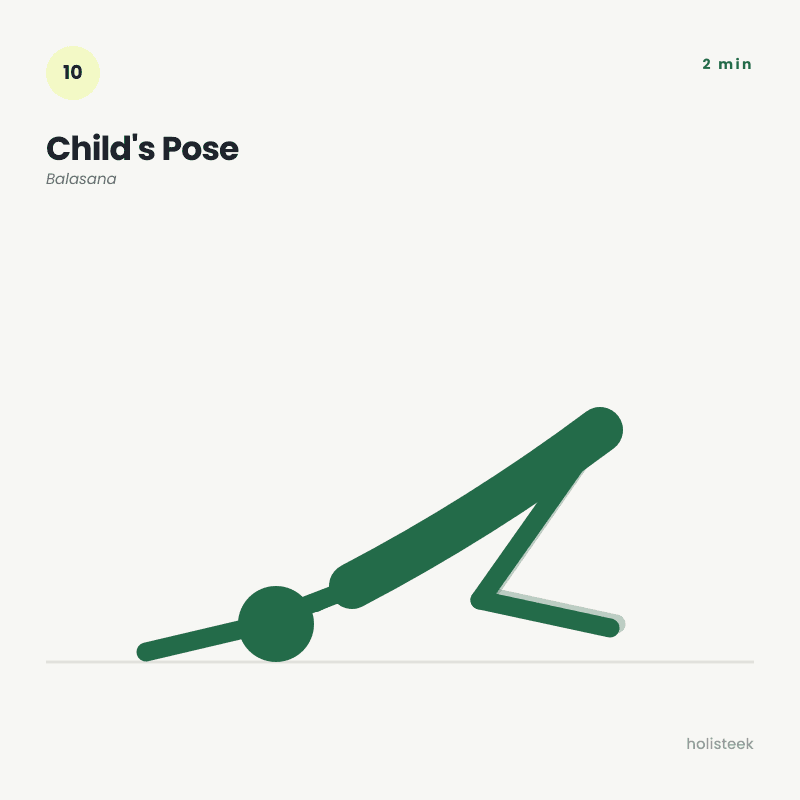
Child's Pose (Balasana)
Child's Pose (Balasana)
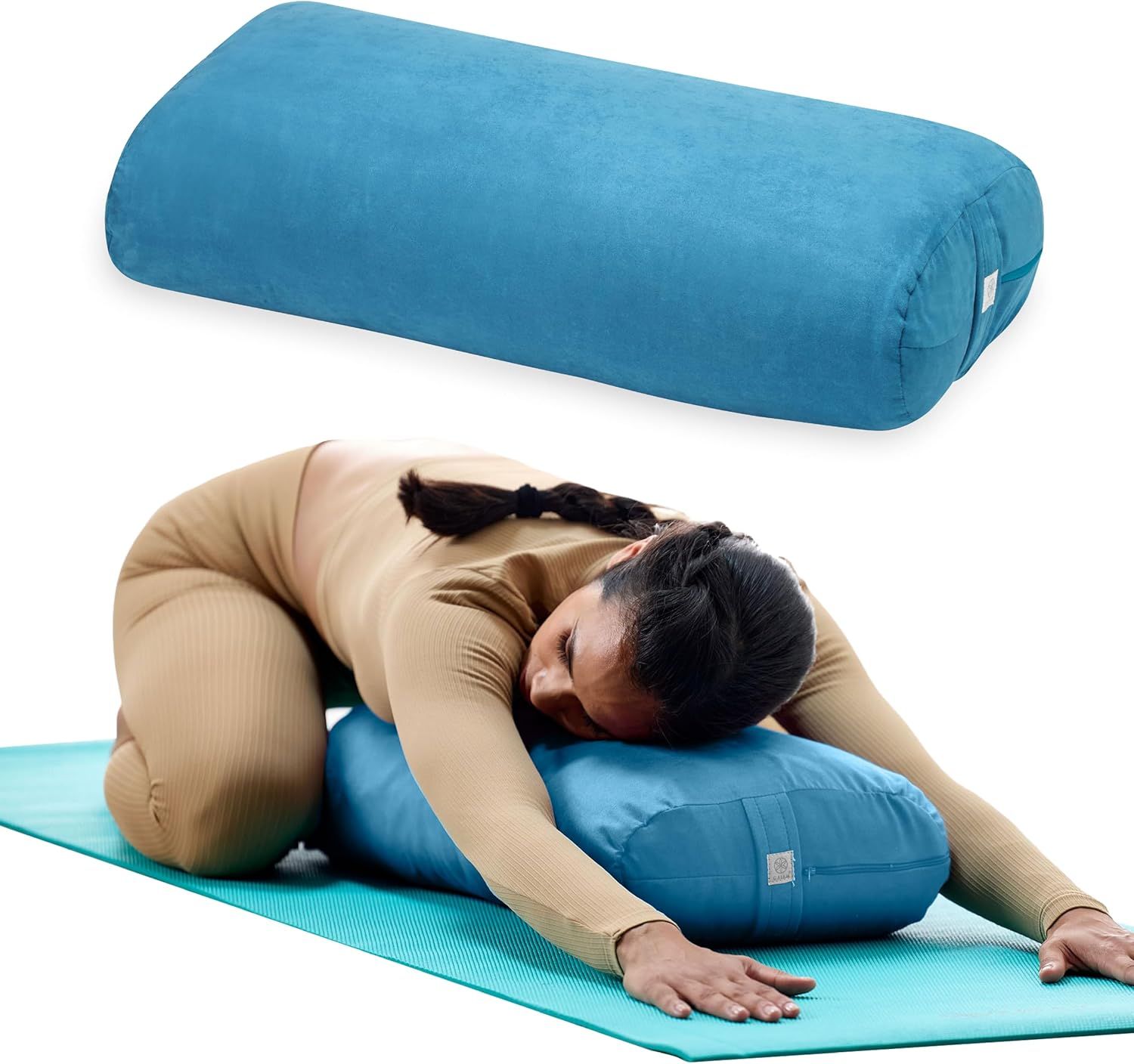
Rest in Child's Pose whenever you feel overwhelmed. Intensity is natural, but sharp pain is a clear signal to stop. Hold for 2 minutes.
What happens during a beginner yoga session?
A beginner session follows a gentle rhythm: prepare your space, connect with steady nasal breathing, and move with intention through basic poses held for sensation rather than speed.
Why people try yoga for beginners at home
Practicing at home removes the commute and eases daily screen tension. Early sessions bring immediate mental calm, followed by noticeable mobility gains in ordinary everyday movements.
Your first practice: What to expect
Initial practices center on exploration over perfection. Expect subtle mental grounding, gentler breathing, and gradual physical flexibility as you learn your body's safe limits.

Frequently Asked Questions
What are the easiest yoga poses for beginners?
Mountain pose, Child's pose, Downward-Facing Dog, and Cat-Cow are gentle starting points. These poses introduce weight distribution and spinal mobility without requiring advanced flexibility.
1.- The short version: Ten poses, fifteen minutes, every day. Frequency matters more than session length.
2.- Control the breath: Breathe in and out through the nose. If the breath becomes ragged, the pose is too big.
3.- Protect your back: Bend the knees in every forward fold. Hamstrings are rarely the real limit.
4.- Watch joint alignment: Never put your foot on the side of the knee in Tree Pose.
5.- Take breaks: Child's Pose is always available at any point during your practice.
6.- Measure real progress: Judge progress by how ordinary movement feels, not by how far down you reach.
When you are ready to explore classes or spaces near you, Holisteek's Places directory can guide that next step.
Get More Wellness Inspiration
Join our community of seekers. Bi-weekly dispatches on holistic science, sustainable living, and hidden wellness gems.

Luz Altamira
Editora enfocada en longevidad, salud femenina y hábitos sostenibles para una vida más equilibrada.
Related Articles
Top Teacher Training Programs for Yoga Instructors
Why Barcelona’s Hottest Party This Summer Started With Breathwork Instead of Tequila
Holisteek partners with Nômade Temple Madrid and JOMO for an exclusive immersive yoga and hypnosis experience
Best Rebounder for Home Workouts and Lymphatic Health

Why Is Dior Selling Yoga Mats?
