Chair Yoga: How a Seated Practice Works for Seniors, Desk Workers, and 3 Key Groups


If you spend hours hunched over a desk or struggle with limited mobility, traditional yoga can feel intimidating or physically impossible.
Chair Yoga: How a Seated Practice Works for Seniors and Desk Workers
Chair yoga is yoga done sitting on a chair, or standing while holding one. Same poses, same breathing, different base.
Key takeaways
Quick daily sequence: A foundational seated routine takes twelve minutes across five gentle poses.
Proper setup matters: Aligning your feet, knees, and spine before moving prevents strain and protects joints.
Joint pain relief: Strong evidence supports chair yoga for reducing osteoarthritis pain and improving daily mobility.
Early stress data: While many experience relaxation, larger trials are still exploring precise mental health outcomes.
What it is, and where it came from
Lakshmi Voelker created chair yoga in 1982 for a student in her thirties who could not practice on the floor due to arthritis. The method built directly on the prop-based tradition established by B.K.S. Iyengar in the 1960s.
Older adults benefit from targeted osteoarthritis trials showing sustained pain reduction, using the chair as a safe precursor to standing balance postures. Desk workers find relief through a twelve-minute sequence focused on outer hip releases where sitting tension accumulates.
Central to its design is safety and proprioception: you learn to notice when the spine slumps and when it over-arches, finding the middle point. The test is that you can still breathe into the sides of the ribs.
Why people try chair yoga
People turn to chair yoga for reasons that range from joint comfort to mental clarity. In a randomized controlled trial published in the Journal of the American Geriatrics Society (2017), Park, McCaffrey, and colleagues evaluated 131 older adults with osteoarthritis of the hip, knee, ankle, or foot.
Participants completed 45-minute sessions twice weekly for eight weeks. Compared to a health education control group, those practicing chair yoga experienced greater reductions in pain and pain interference in daily life, with improvements in pain interference persisting roughly three months later.
By comparison, a 2023 study published in Healthcare observed functional fitness improvements and reduced knee discomfort after 12 weeks of practice, but its quasi-experimental, non-randomized design among 85 Taiwanese women carries less evidentiary weight.
The seated format makes it a practical choice for office breaks or long-haul travel, helping to release tension without leaving the desk or airline seat.
Stress and mood findings require a nuanced view. In Park et al. (2019, American Journal of Alzheimer's Disease & Other Dementias), 12 weeks of twice-weekly chair yoga showed no significant difference in anxiety compared to chair exercise or music interventions.
The chair yoga group did see greater quality-of-life gains than the music group, though agitation levels also rose, highlighting that psychological outcomes vary across participants.
A consistent practice also supports improved everyday strength, balance, and mobility, qualities that keep life functional and independent. The chair offers a stable base, making poses accessible to a wide range of bodies.
When to consult a professional first
None of these situations prevent you from practicing chair yoga. They simply determine which poses are appropriate, with twists, forward folds, and any inversions requiring validation from a healthcare provider:
Recent abdominal, hip, shoulder, or eye surgery
Joint replacement within the past few months
Uncontrolled hypertension
Glaucoma or recent retinal issues
Osteoporosis or low bone density
Acute spinal disc issues
Severe loss of balance or frequent dizziness
Pregnancy
Once cleared, you can explore yoga classes and studios near you on Holisteek.
Your first session: what to expect
If you attend an in-person studio class, arrive ten minutes early to adjust your chair and notify the instructor of any physical restrictions.
1. Seated Mountain Pose
Sit upright away from the backrest with feet flat on the floor and knees stacked over ankles. Rest your palms on your thighs and hold for two minutes while breathing deeply.
2. Seated Cat and Cow
Inhale to arch your back and open the chest forward, then exhale to round your spine and drop your chin toward your chest. Flow through both phases for eight to ten repetitions.
3. Seated Twist
Lengthen your spine, place your right hand on your left outer thigh, and turn your torso gently without yanking the chair. Hold for 30 to 60 seconds per side.
4. Seated Figure Four
Rest one ankle across the opposite knee while keeping the foot flexed to protect your knee joint. Hinge forward slightly at the hips and hold for one minute per side.
5. Seated Forward Fold
Hinge from your hips to bring your chest down toward your thighs, releasing your arms and neck toward the floor. Hold for one to two minutes to decompress your back.
Set the chair up first
Five minutes of setup decide whether the next twenty are worth anything. Get it wrong, and gentle movements build tension instead of releasing it. The seated foundation determines how load travels through the spine, hips, and shoulders.
Start by scooting forward until you are perched near the front edge of the chair, avoiding contact with the backrest. This position frees the pelvis to tilt slightly forward, encouraging the natural lumbar curve. Plant both feet flat on the floor,
hip-width apart, with ankles stacked directly under the knees. A block or folded blanket under the feet helps if the heels do not reach the ground comfortably.
Press down evenly through the four corners of each foot to activate the leg muscles and create a stable anchor.
From this grounded base, lengthen the spine as if a thread is pulling gently from the crown of the head toward the ceiling. The chin stays parallel to the floor, the ribcage softens inward, and the shoulders release away from the ears.
This is not a rigid military posture but a living, breathing alignment that allows the diaphragm to move freely.
Proprioception sharpens here: you learn to feel when the spine collapses into a slump and when it over-arches into a swayback, finding a balanced middle ground that protects the vertebrae.
Hand placement matters too. Resting palms face-down on the thighs grounds the upper body, while turning palms face-up encourages an open, receptive quality.
During twists, a light touch on the knee or outer thigh provides sensory feedback without forcing the rotation.
Never pull on the chair back to get deeper into a twist. The chair is there for feedback, not leverage.
A complete foundational routine takes twelve minutes across five practical postures:
Seated Mountain with Breath: Sit upright with feet flat, hands resting on thighs. Inhale and exhale slowly for two minutes to ground the body and establish postural alignment.
Seated Cat and Cow: Inhale to arch the back and lift the chest; exhale to round the spine and tuck the chin. Flow for eight to ten rounds to mobilize spinal vertebrae.
Seated Twist: Lengthen the spine, place one hand on the opposite thigh, and gently rotate the torso. Hold for 30 to 60 seconds per side to release mid-back tension.
Seated Figure Four: Cross one ankle over the opposite knee, keeping the foot flexed, and lean forward gently. Hold for one minute per side to stretch tight outer hips.
Supported Forward Fold: Hinge at the hips and rest your chest toward your thighs, letting your arms hang down. Hold for one to two minutes to decompress the spine and calm the nervous system.
This foundational work may feel subtle, but it is where the deepest benefits of chair yoga take root. A well-aligned seated position improves circulation, supports bone density, and prepares the nervous system for breathwork and meditation. For office workers,
these principles translate directly to the desk, turning an ordinary chair into a tool for active recovery. For older adults, mastering this base builds the confidence to explore standing poses later, using the chair as a transitional support rather than a permanent crutch.
Start Your Chair Yoga Journey Today
Chair yoga offers a doorway into a sustainable, calming practice that adapts to your life without pressure or performance.
Whether you are returning to movement, managing a physical condition, or simply curious about a different way to practice, there is a class and a teacher waiting to welcome you exactly as you are.
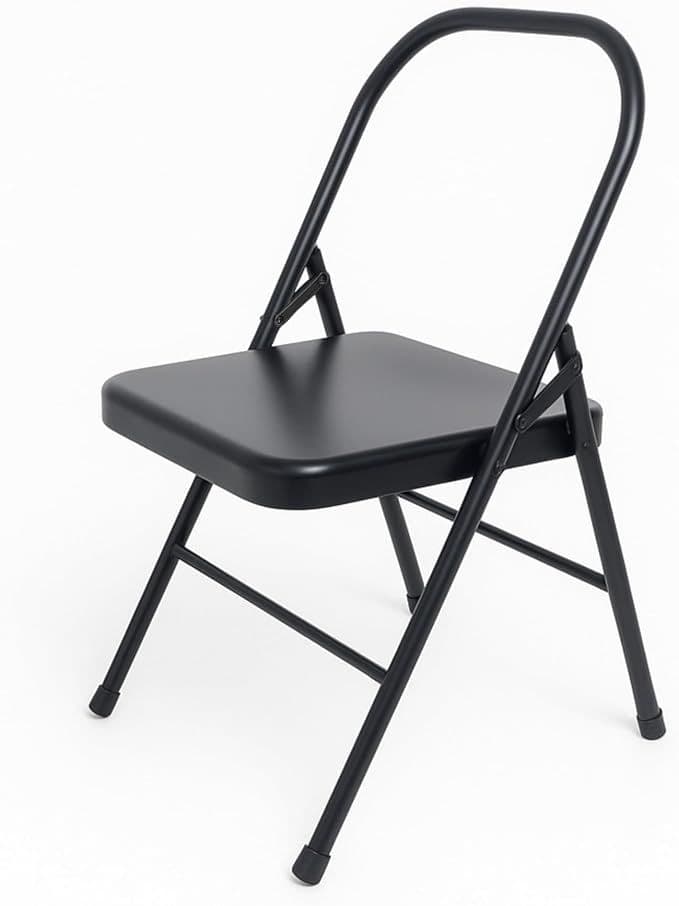
Yogikuti Standard Yoga Chair: The backless folding chair standard in Iyengar studios, providing stable support for seated postures and gentle backbends.
Hugger Mugger Mexican Yoga Blanket: Folded under your sit bones when the seat is too low or firm, helping elevate the pelvis into proper spinal alignment.

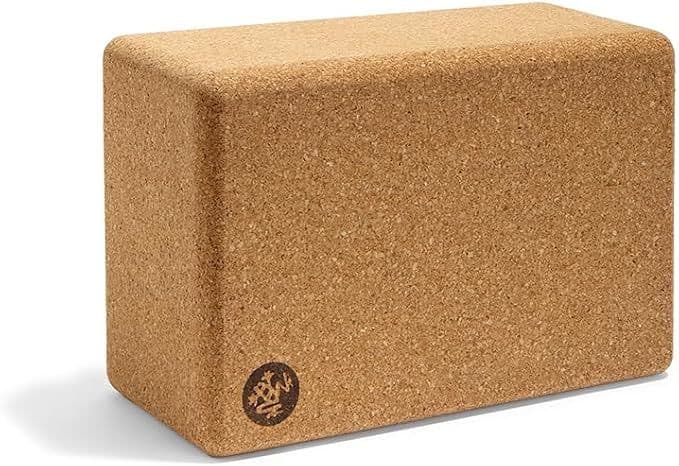
Manduka Cork Yoga Block: Placed under your feet when heels do not reach the floor comfortably; consider getting two for balanced support.
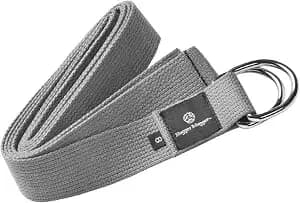
Hugger Mugger D-Ring Cotton Yoga Strap (8-Foot): Bridges reaching gaps in seated stretches without straining your shoulders or rounding your spine.
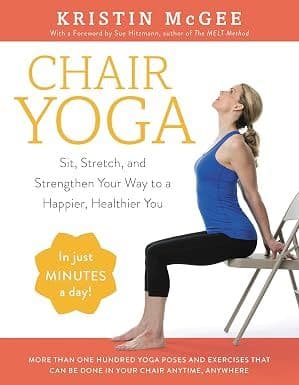
Chair Yoga by Kristin McGee: A practical guide featuring short photographed sequences designed for quick daily routines.
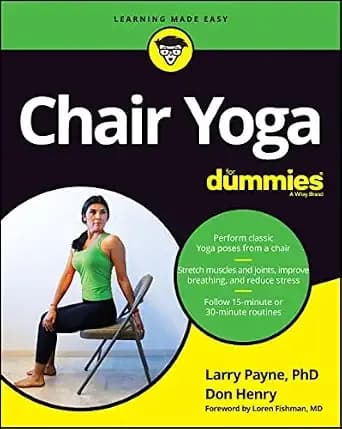
Chair Yoga For Dummies by Larry Payne and Don Henry: A comprehensive reference covering extended seated practices, posture adaptations, and clear contraindications.
Frequently asked questions
Get More Wellness Inspiration
Join our community of seekers. Bi-weekly dispatches on holistic science, sustainable living, and hidden wellness gems.

Ava Moreno
Wellness editor focused on female biology, metabolic health, and longevity culture. She writes calm, practical pieces that turn research into rituals people can actually use.
Related Articles
Holisteek partners with Nômade Temple Madrid and JOMO for an exclusive immersive yoga and hypnosis experience

Why Is Dior Selling Yoga Mats?

Top Teacher Training Programs for Yoga Instructors

Rebounder vs Vibration Plate: Which One Belongs in Your Home
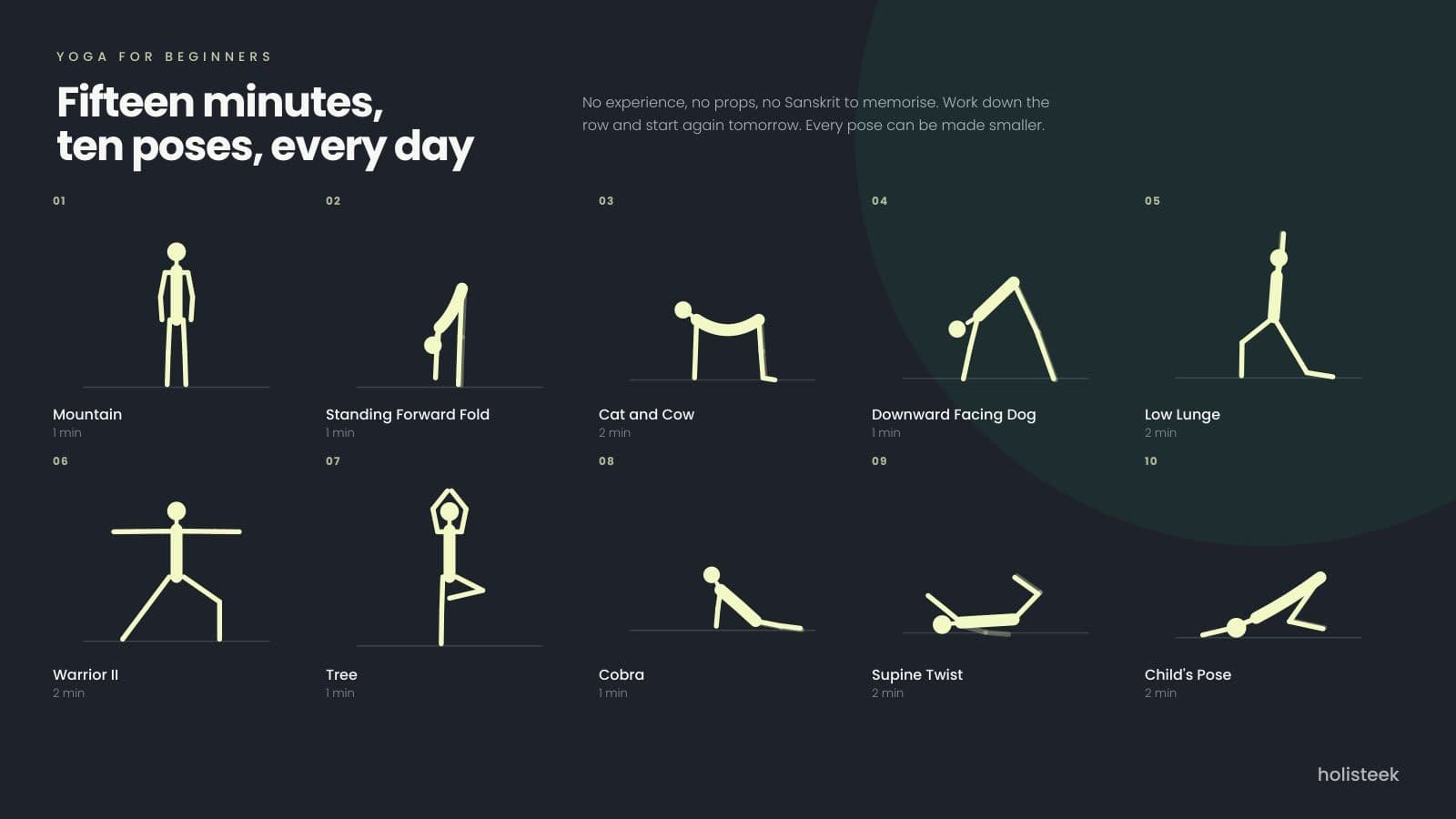
Yoga for Beginners: A 15-Minute Daily Routine to Improve Mobility
Acupressure Mat Benefits: Five Reasons It Earns a Place Beside Your Bed
How Thick Should a Yoga Mat Be? Answer Four Questions and Find Out
Somatic Exercises: 3 Gentle Movement Practices and What They Can—and Cannot—Do
Foam Roller Buying Guide: 4 Main Densities, Textures, Lengths and What to Spend on Your First One