Acupressure Mat Benefits: Five Reasons It Earns a Place Beside Your Bed

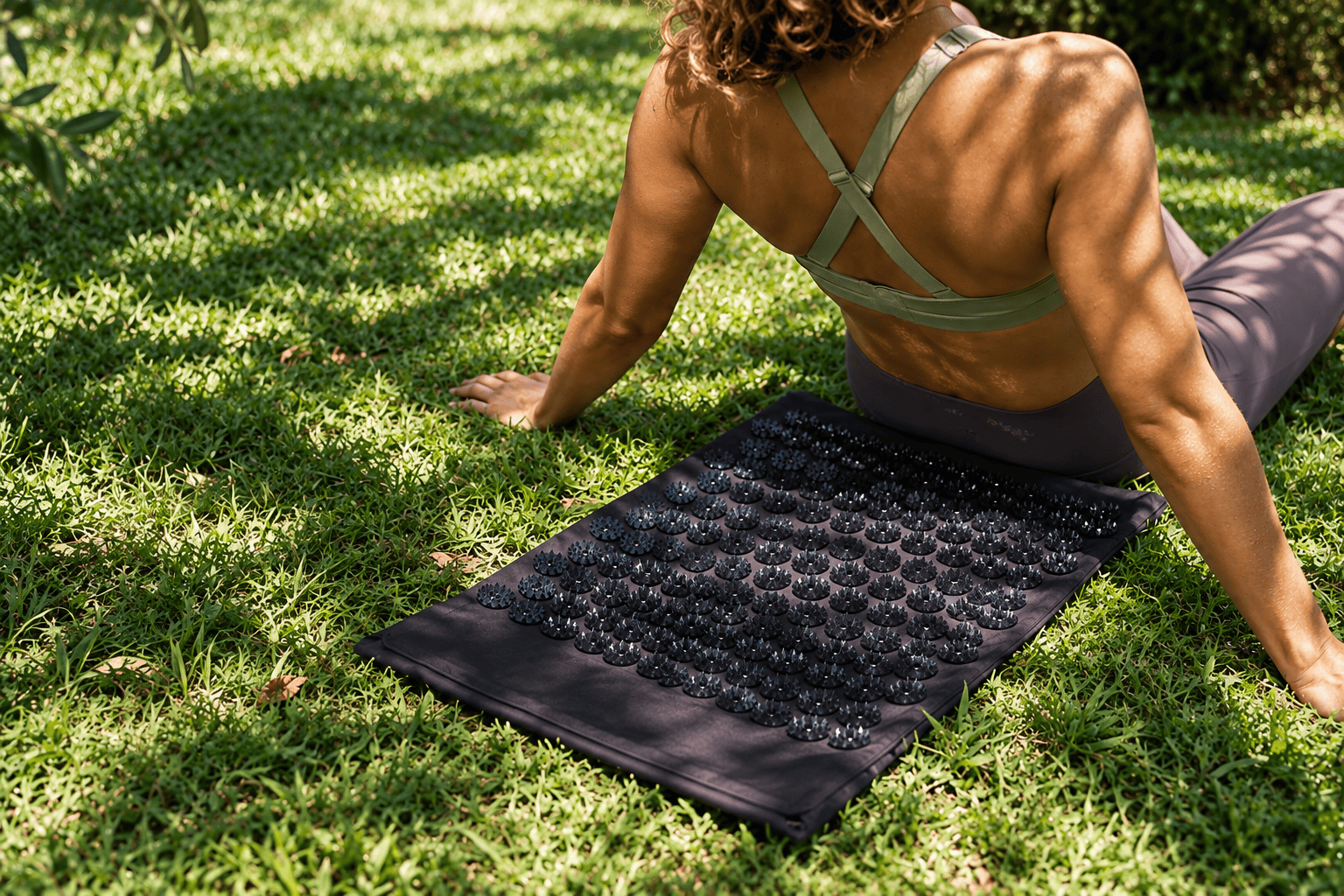
An acupressure mat is a foam cushion covered in thousands of plastic spikes-a modern bed of nails. It doesn't pierce the skin. The spikes distribute body weight evenly, and the sensation shifts from sharp to a warm, buzzing hum within minutes.
Many people use it to release muscle tension, unwind before sleep, or recover after exercise. It's not a medical device, and benefits are gradual, but the routine itself can become a grounding anchor at the end of the day.
Don't expect a miracle. But the afterglow can feel similar to a deep-tissue massage-without the appointment. Sessions usually last 10 to 20 minutes, and beginners start with a light shirt until the body adjusts.
Price isn't a reliable guide: budget foam mats can feel similar to pricier coconut-fiber versions, though durability and eco-fills cost more.
What you get for those twenty minutes is specific: a back that stops complaining by evening, shoulders that come down from your ears, an off switch before bed, legs that recover faster. Below are the five, each with the shape of mat that delivers it.
The Comparison, Once
Six mats worth your money, side by side. Read this table and you are done comparing.
Which One in One Line

Lower Back
A standard full-length mat, used flat on a firm floor.
Neck and Shoulders
The shaped pillow, which most sets already include.
Legs and Feet
An extra-long mat, with room for both legs.
All of the Above
A long mat that ships with a pillow.
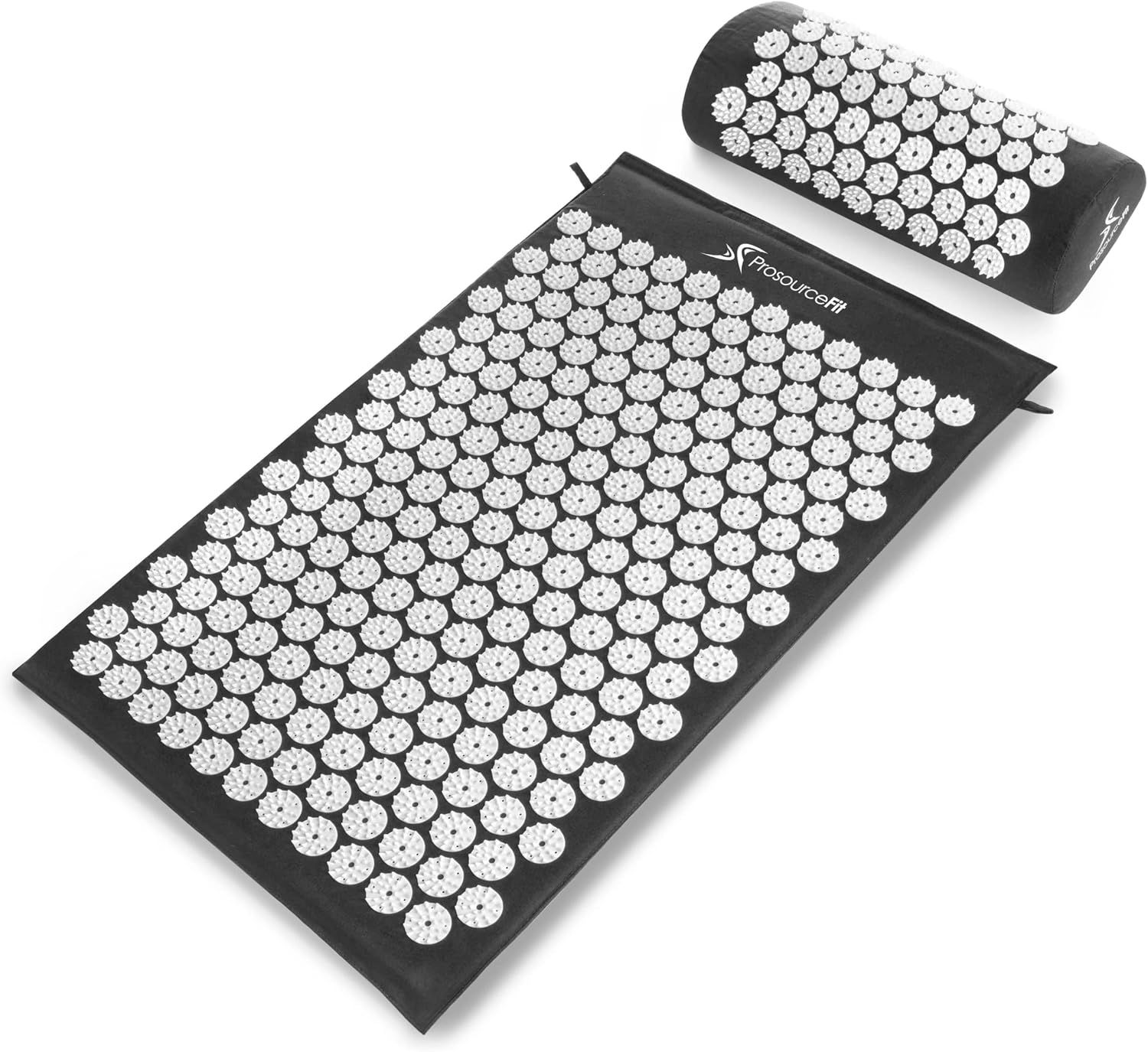
1. Starting Out: ProsourceFit Acupressure Mat and Pillow Set
The easiest way to start. A soft cotton cover, a mat for your lower back and a matching pillow for your neck, so one set covers the two places most people feel tension at the end of the day.
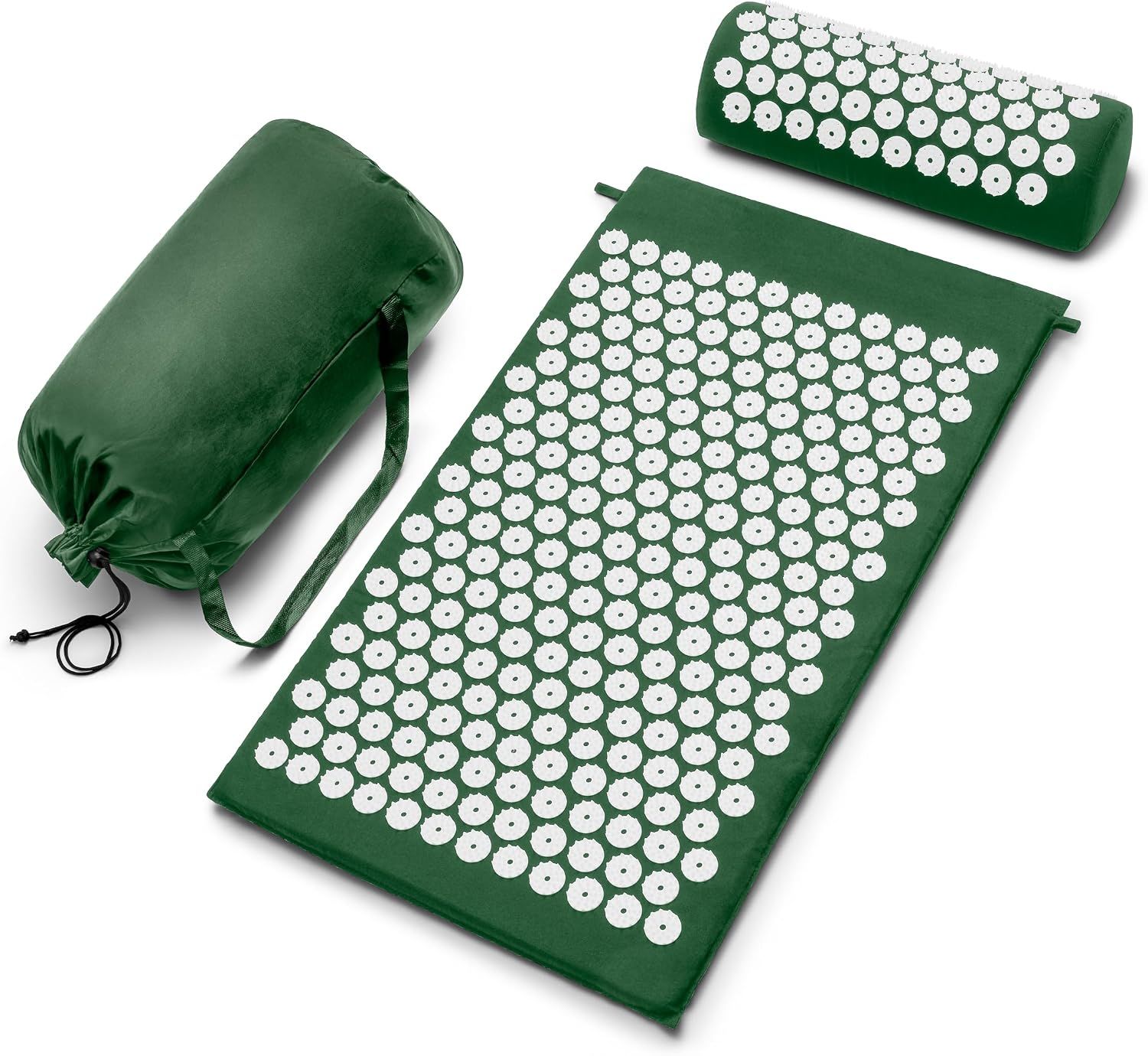
2. More Points, Gentler Feel: Nayoya Acupressure Mat and Neck Pillow Set, 6,210 points
With 6,210 points, your weight spreads across more spikes, which lowers the pressure on each one. The neck pillow comes in the same set, and the carry box keeps it tidy beside the bed.
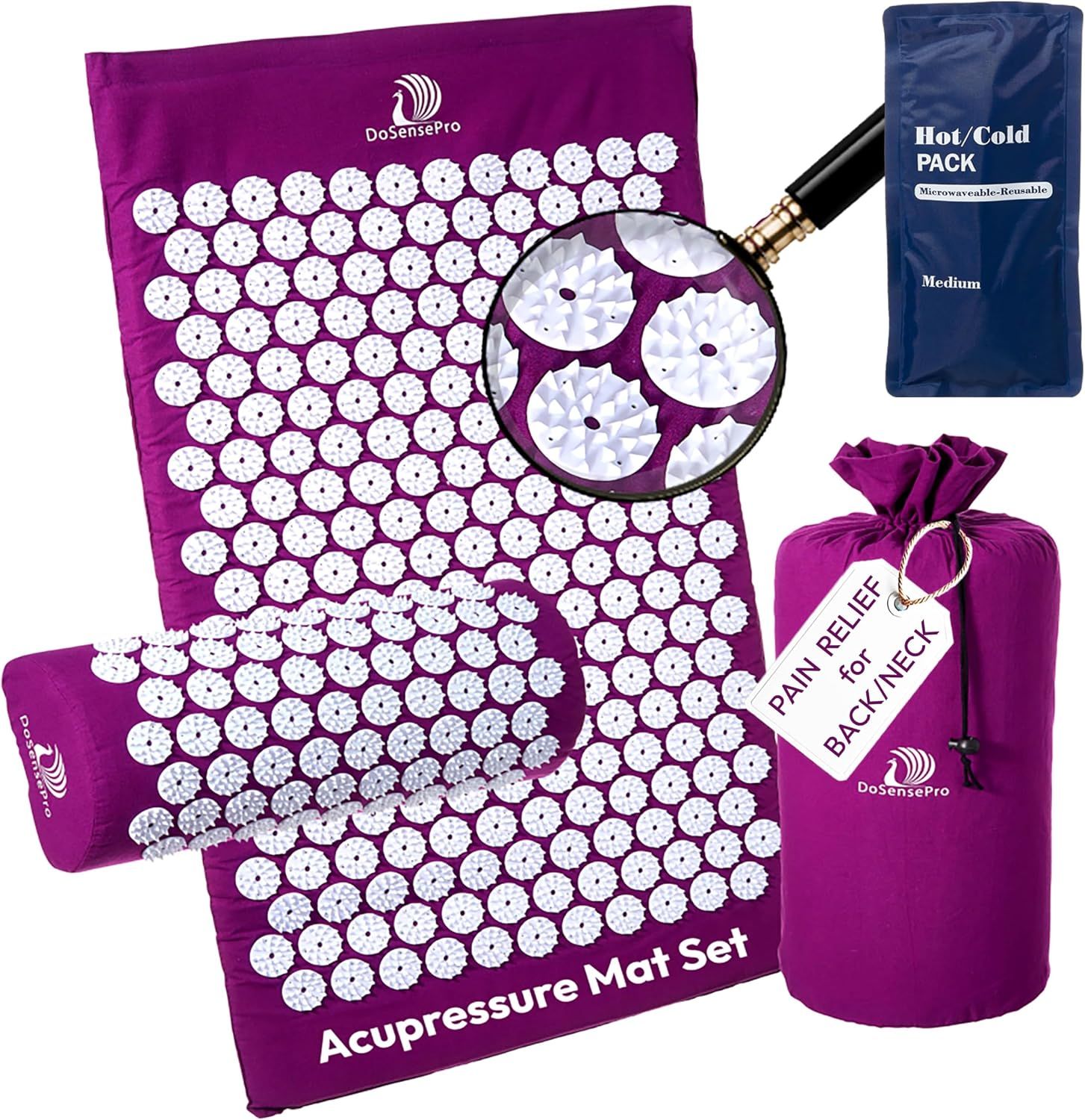
3. Back and Legs: DoSensePro Acupressure Mat and Pillow Set 29 inches
At 29 inches long, it gives you room from your shoulders down to your lower back, and you can slide it down for the backs of your thighs and calves. The pillow takes care of your neck in the same session.
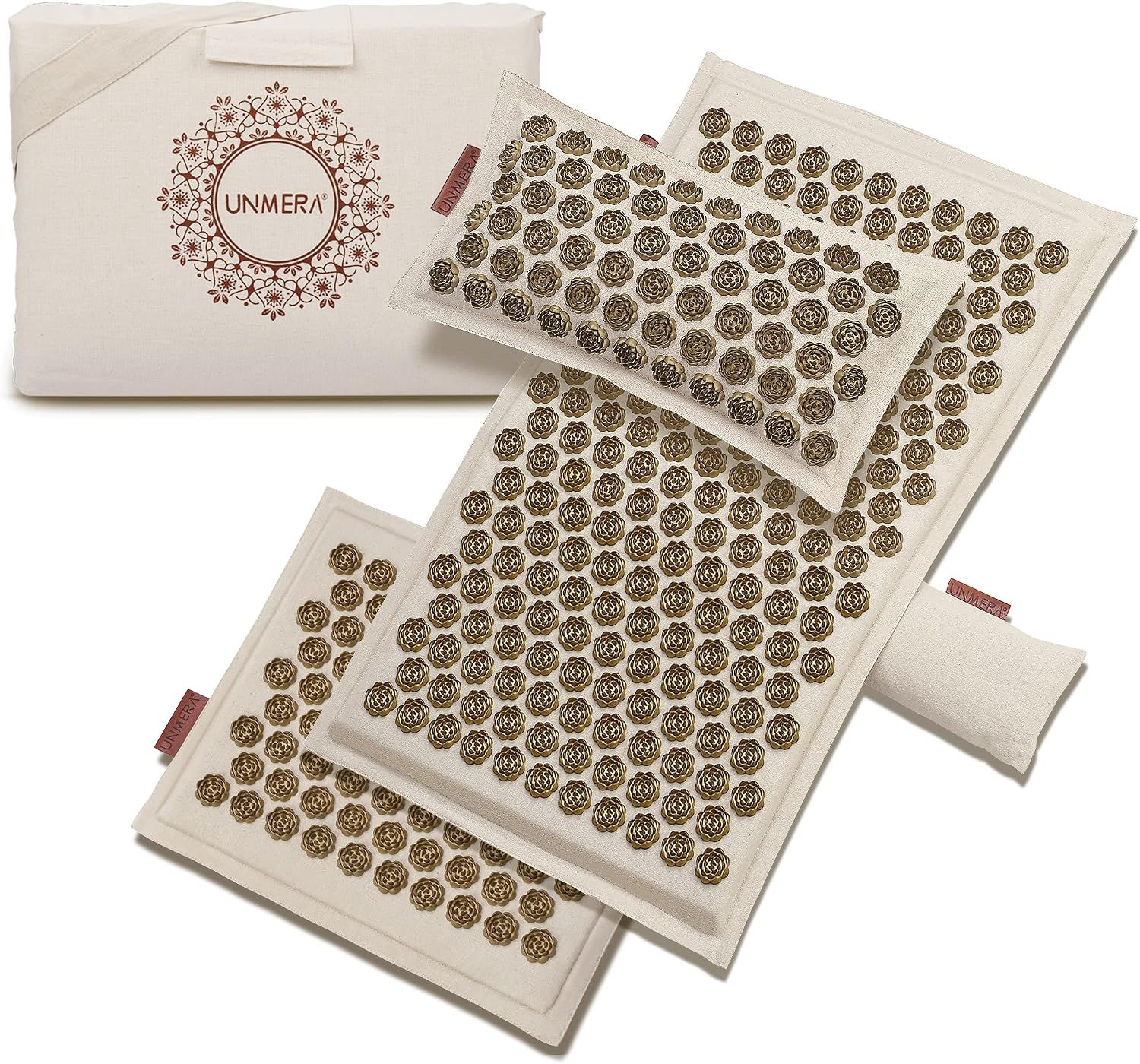
4. Natural Fiber: Ajna Acupressure Mat and Pillow Set, Organic Linen
An organic linen cover breathes, wicks moisture and resists pilling, so it stays pleasant on bare skin wash after wash. It is the pick when natural materials matter to you as much as the spikes do.
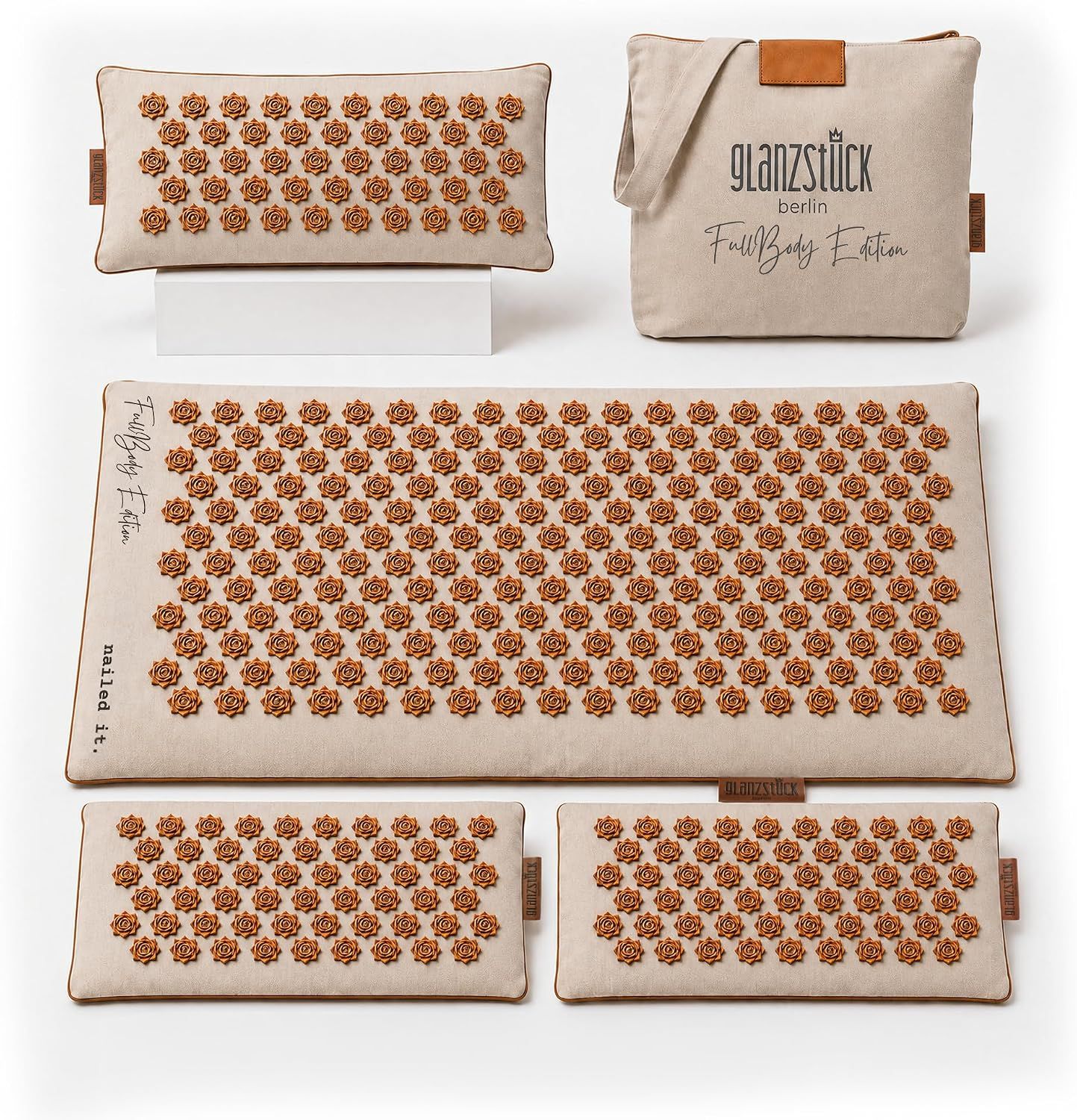
5. Built for the Long Run: ShaktiMat Classic, Original Intensity
The mat to keep for years. The Classic in its original intensity, with an organic cotton cover, is the one to choose once the routine has stuck and you want a mat that keeps up with nightly use.
6. Neck and Shoulders: ProsourceFit Acupressure Pillow
A shaped pillow that settles into the curve of your neck and reaches the tops of your shoulders. Use it on the floor on its own, or tuck it behind your lower back in a desk chair for a quick reset.
This guide includes affiliate links. If you buy through them, Holisteek may earn a small commission at no extra cost to you.
Surface and Grip: Choosing Your Spike Intensity
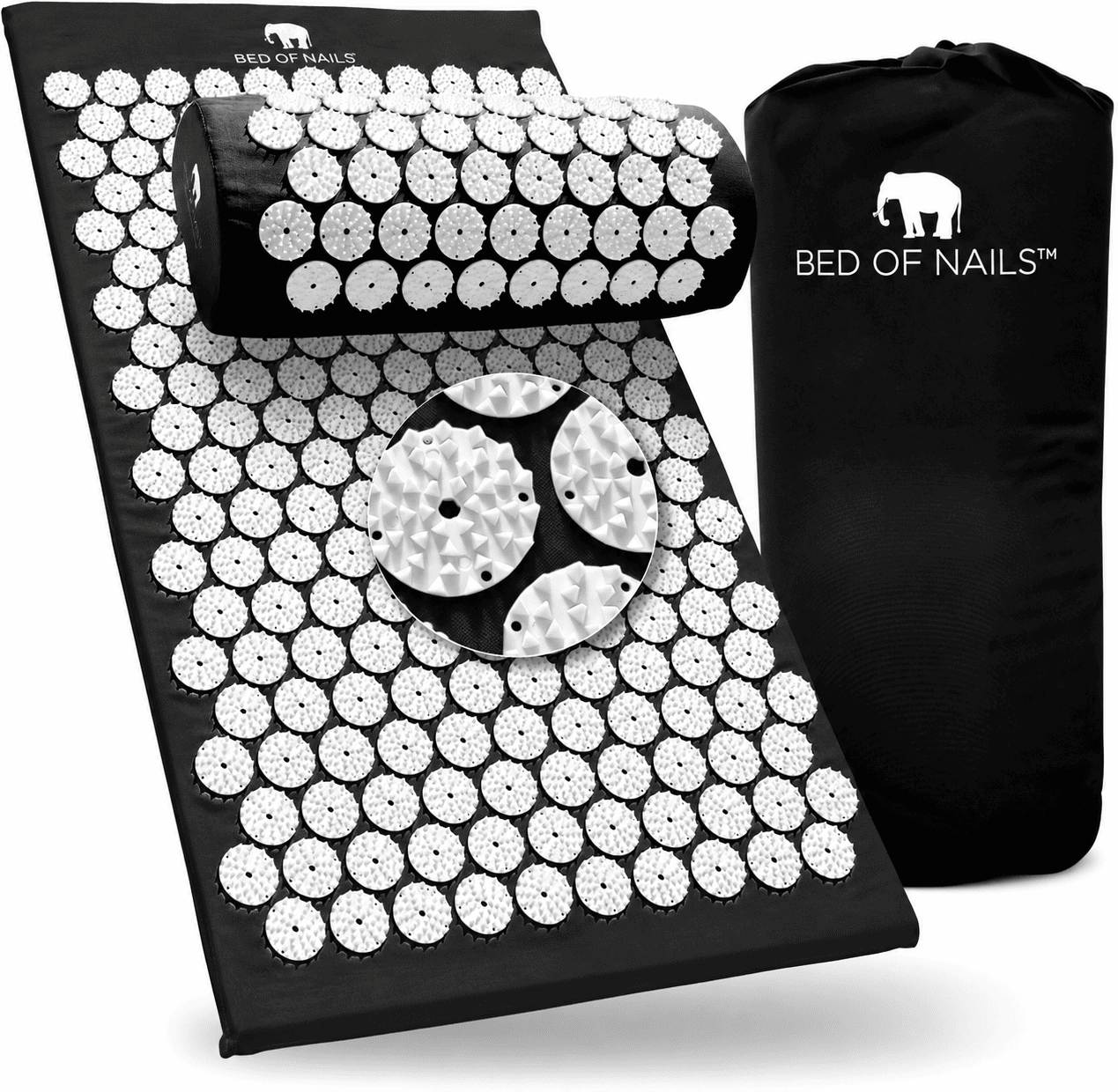
Spike intensity depends on two variables: the material and the number of points. You can adjust how the mat feels by choosing a pattern that matches your skin sensitivity.
The spikes should be firm but not sharp, and the fabric needs to stay put on the floor.
More spikes does not always mean more pain. Mats with 6,000 to 8,000 points spread your body weight over a larger area, reducing the intensity per point.
Choose mats with non-toxic ABS plastic. Cheap plastics can smell and degrade after a few sessions.
Take the core out and wash the cover alone, never soak the whole mat.
Dry it in the shade, direct sun makes the spikes brittle.
Roll it spikes outward so it lies flat next time.
Keep it in the room where you use it, the mats that live in a cupboard stay in the cupboard.
1. Start with a layer. Lie down through a cotton t-shirt, for five minutes.
2. Wait for the shift. Stay still and wait for the shift, sharp becomes warm between one and three minutes.
3. Extend your duration. Build to fifteen or twenty minutes over a fortnight.
4. Progress to direct contact. Then drop the shirt, bare skin is the cheapest way to increase intensity.
Eventually, intensity becomes a matter of personal preference. Some users want a sharper sensation for deeper muscle work, while others prefer a gentler mat for longer sessions.
What You Are Actually Paying For
A Swedish study at Karlstad University tested two different brands against each other over three weeks and found no difference in results between them. The expensive mat does not buy a stronger effect, but a cover you like and a core that keeps its shape.
What changes between an entry-level mat and a premium one is how long the core holds its shape and how the cover feels against the skin, not the spike intensity.
Entry-level models use standard polyurethane foam cores with cotton covers. Premium designs replace synthetic foam with natural coconut fiber or rubber, which resist sagging and maintain structural integrity over years of regular use.
Fabric quality also shifts noticeably across tiers. Natural linen covers breathe more effectively, wick away moisture, and resist surface pilling after repeated washing cycles compared to basic untreated cotton fabrics.
Spike sharpness and pattern remain virtually identical across tiers. Upgrading secures structural durability and skin-friendly textiles, rather than a different level of acupressure stimulation.
Materials Matter: Cotton, Foam, and Eco-Fills
Three materials define the feel and longevity of an acupressure mat: the internal cushioning, the spike base, and the fabric covering the spikes.
Polyurethane Foam (Standard)
The classic choice, a dense foam core. It's lightweight and molds comfortably to your back. The trade-off? It tends to trap body heat, which some people find unpleasant after 20 minutes. It also absorbs less moisture, making cleaning simpler.
Coconut Fiber (Eco-Fill)
A natural, cooling alternative that stays firm and supportive throughout a session. The downside is a noticeably stiffer initial feel that may take a few uses to get used to. Coconut fiber is naturally antimicrobial, but it's heavier and needs thorough drying after cleaning.
Cover Material: Cotton vs. Linen
Standard cotton covers are affordable and easy to wash but can feel slightly scratchy on bare skin. Linen is softer, more breathable, and wicks moisture. Linen also resists pilling, so it looks fresher after multiple washes.
Care and Maintenance: Keeping Spikes Clean
A clean mat performs better and lasts longer. The foam core is the fragile part, so never soak the whole thing.
Hand wash only. Remove the foam core first, then rinse the cotton or linen cover in cold water with a mild detergent.
Air dry in the shade. Direct sun hardens plastic spikes and can make them brittle over time.
Roll spikes outward when storing. This protects the points and keeps the mat lying flat for your next session.
These small habits matter more than the price tag. A well-kept budget mat often outlasts a neglected premium one.
Frequently Asked Questions
Decide what hurts first. Lower back means a full mat, neck and shoulders mean the shaped pillow, and legs and feet mean a long one.
Price buys build, not relief. Two brands tested head to head produced the same result, so a premium mat buys durability and a nicer cover, not a stronger effect.
Starting out: The ProsourceFit set is the low-risk way to find out whether you will use it.
Material priorities: For natural fibres, choose the Ajna linen set. For a mat built for the long run, pick the ShaktiMat Classic.
Pace your routine. First session, spend five minutes through a t-shirt. Build to twenty, then go barefoot.
Combine methods. It sits alongside exercise and treatment, which is exactly how the trial that found a result used it.
Get More Wellness Inspiration
Join our community of seekers. Bi-weekly dispatches on holistic science, sustainable living, and hidden wellness gems.

Camila Rios
Nutrition journalist and recovery-focused writer translating complex studies into clear guidance on food, hormones, energy, and daily resilience.
Related Articles

Holisteek partners with Nômade Temple Madrid and JOMO for an exclusive immersive yoga and hypnosis experience
Why Is Dior Selling Yoga Mats?

Top Teacher Training Programs for Yoga Instructors

Rebounder vs Vibration Plate: Which One Belongs in Your Home