Best Rosemary Oil for Hair Growth: 3 Formulations for Dilution, Scalp Use, and What the Research Shows


Best Rosemary Oil for Hair Growth: 3 Formulations for Dilution, Scalp Use, and What the Research Shows
Rosemary Oil for Hair Growth
This guide includes affiliate links.
The best rosemary oil for hair growth is not a single bottle. It is a formulation that matches your scalp, whether that means a pure essential oil you dilute yourself or a pre-mixed rosemary hair oil you can apply straight from the dropper.
What the Clinical Research Shows
Clinical evidence behind rosemary oil centers on a landmark study by Panahi, Taghizadeh, Marzony, and Sahebkar, published in Skinmed in 2015.
Researchers randomized 100 participants with androgenetic alopecia to apply either rosemary essential oil or minoxidil 2% twice daily for six months.
At three months, neither group experienced significant change. By six months, both groups showed a significant increase in hair count, with no statistically significant difference between them.
Notably, participants in the rosemary oil group reported significantly less scalp itching than those using minoxidil 2%.
What makes this result stand out: rosemary is not working through scent or wishful thinking. It has identifiable compounds acting on circulation, inflammation and the same hormonal pathway that pharmaceutical treatments target.
Expect a realistic timeline of six months. Twice a week, ten minutes of scalp massage, twenty minutes total. That is the entire commitment.
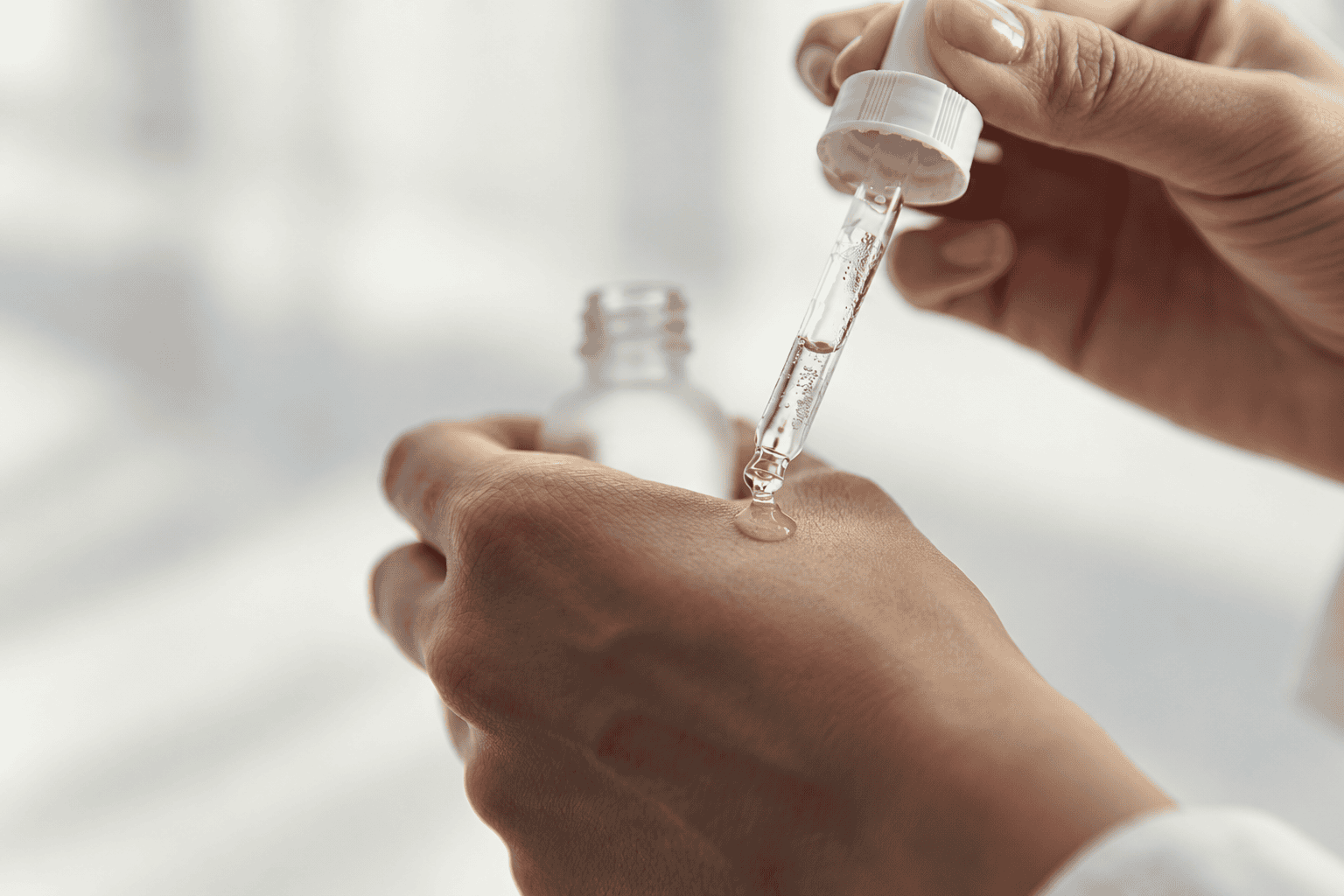
Pure rosemary essential oil for hair is potent and should never touch the scalp undiluted; pre-mixed oils already carry a carrier like jojoba or castor.
Essential Formulations: Purity vs. Pre-Mixed Blends
Not every bottle labeled rosemary oil for hair growth works the same way. Some hold 100% pure essential oil, a concentrate that must be diluted first. Others arrive pre-mixed with a carrier, ready for the scalp.
Know which format you are buying before you commit.
Concentrated Essential Oil. Steam-distilled or cold-pressed, this is the raw material. It requires a carrier such as jojoba or castor oil, and one bottle lasts months. Expect potency with zero convenience.
Therapeutic Blends. These pair rosemary with complementary botanical oils in a fixed ratio. They are ready to use, and you cannot adjust concentration to your own scalp.
Fortified Scalp Serums. Lighter textures built for daily use, often with added humectants. Convenient, though rosemary content is usually the lowest of the three.
Purity and format matter more than the label. Check the base carrier oil and the rosemary concentration before you buy: together they decide how each blend performs on your scalp.
Our Top Picks: Rosemary Oil for Scalp and Growth
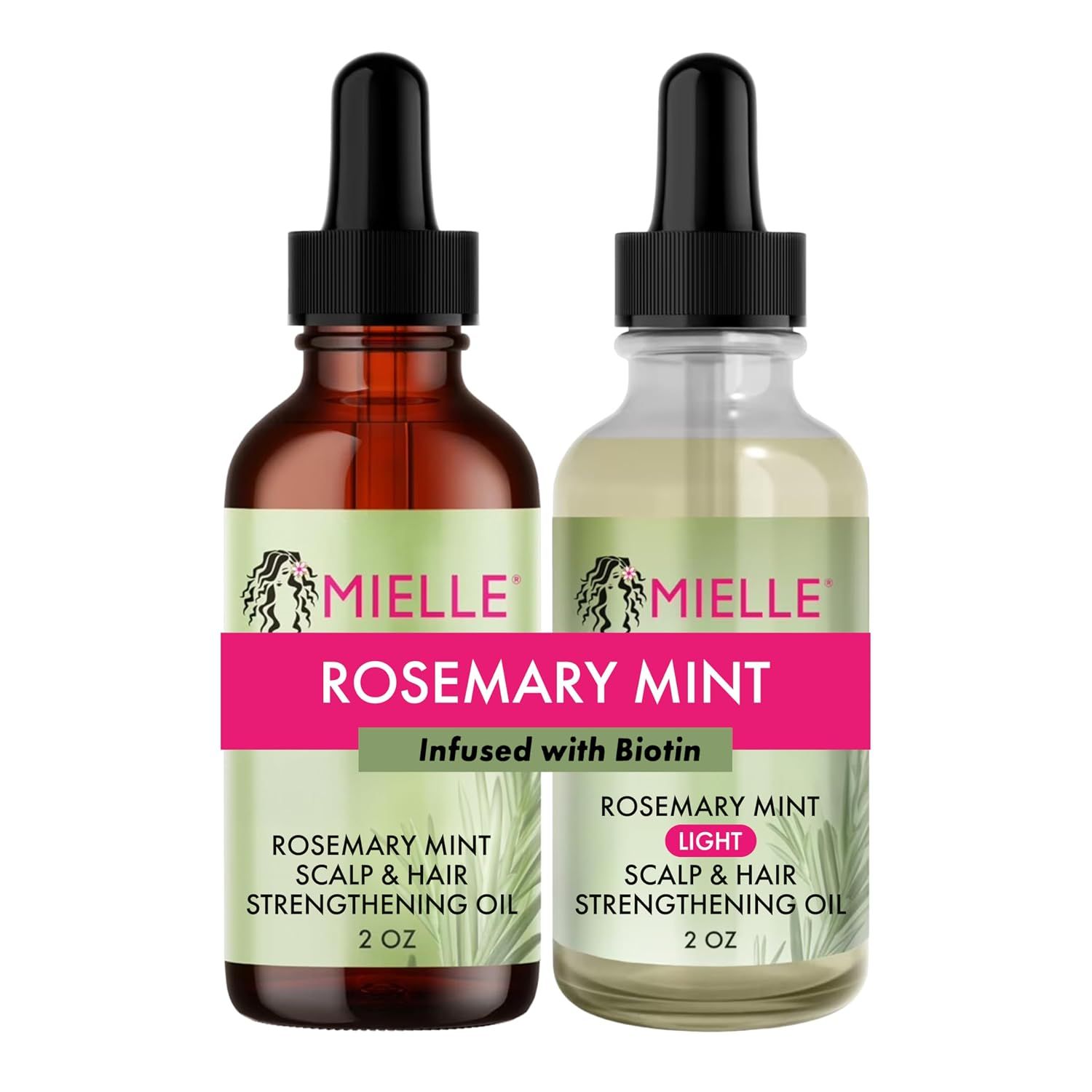
These are the top-rated rosemary oils on Amazon. Pick by hair type: the original Mielle blend for dry or coarse hair, the light version for fine hair, and the pure essential oil if you want to mix your own.
Mielle Organics Rosemary Mint Hair Oil with Biotin
Around $10. Currently the number one seller in Hair Treatment Oils on Amazon. The castor oil makes it the pick for dry or coarse hair.
What's inside and why:
Rosemary: for circulation and the 5-alpha-reductase pathway.
Biotin: supports keratin production, which is what your hair is made of.
Castor oil: thick and occlusive, so it seals moisture in and helps hair feel denser.
Mint: creates that tingle, which is increased blood flow you can actually feel.
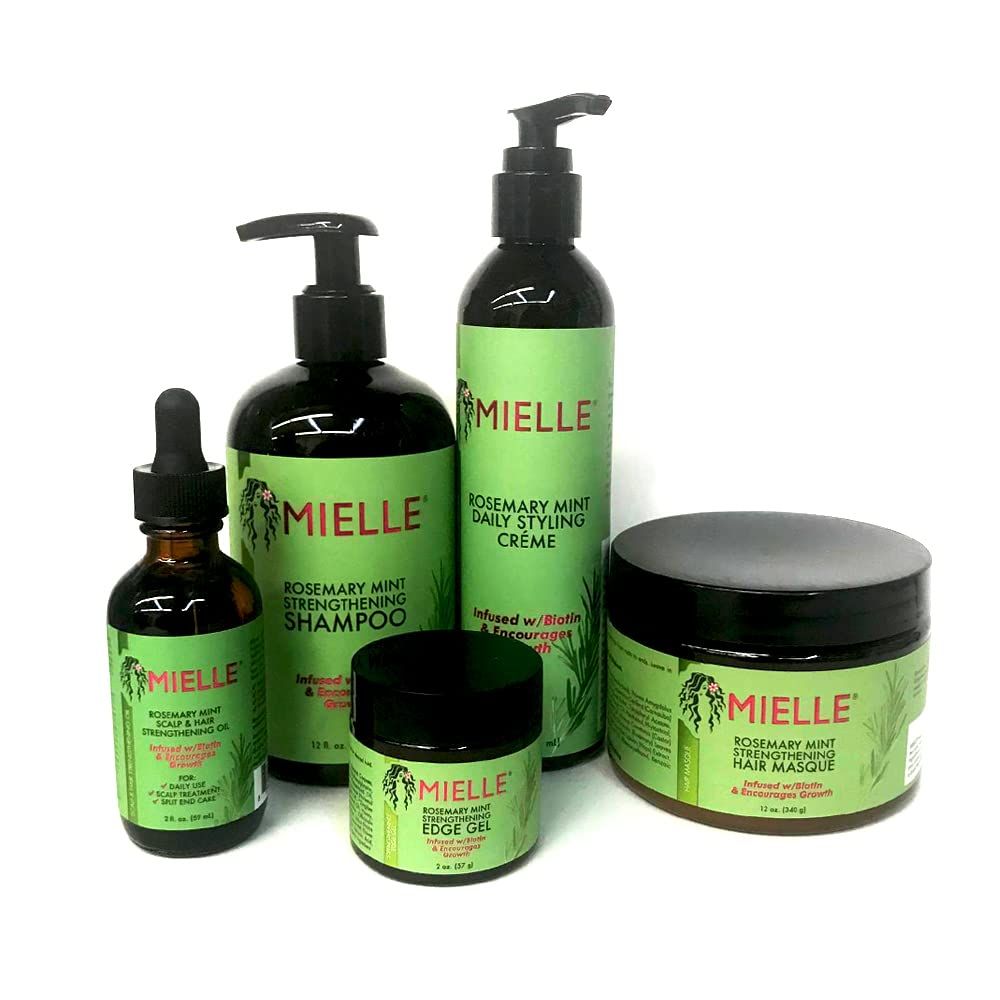
Mielle Rosemary and Mint Light Hair Oil
Around $10. The version for fine hair, built for strands that heavy oils weigh down.
What's inside and why:
Rosemary: for circulation and the 5-alpha-reductase pathway.
Mint: creates that tingle, which is increased blood flow you can actually feel.
A lighter formula: made for fine hair, which heavy oils like castor can leave flat.
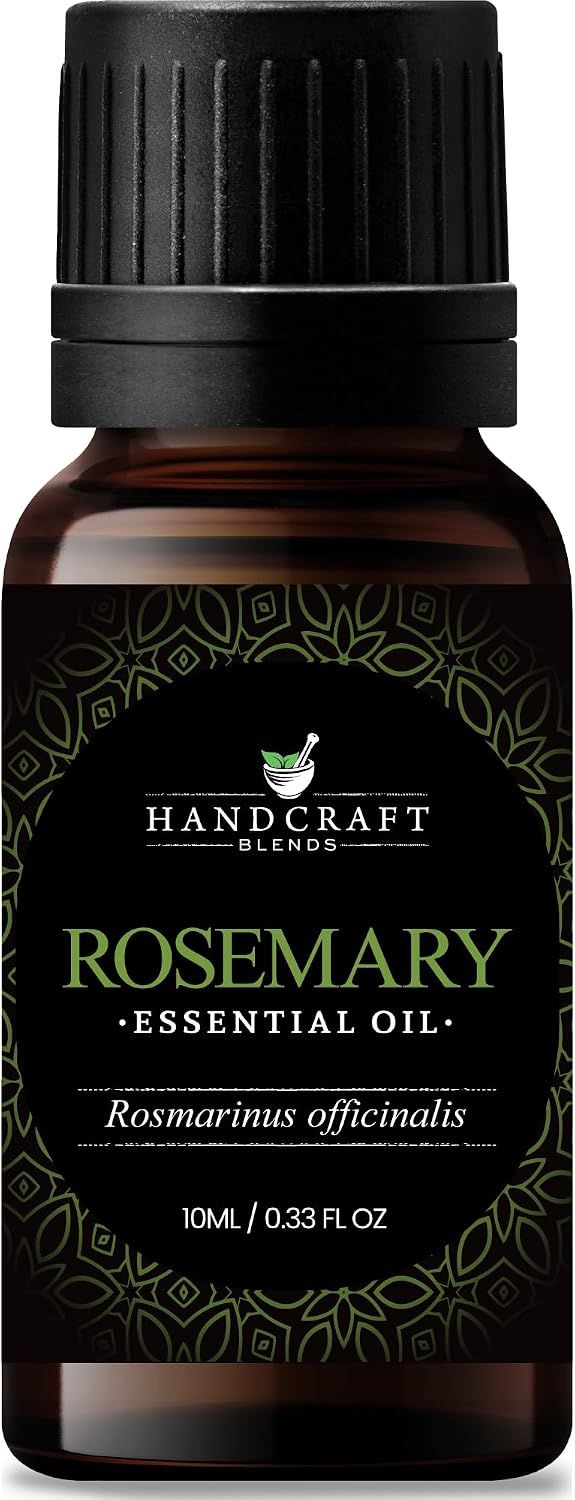
Handcraft Blends Rosemary Essential Oil 4oz
Around $12. An Amazon number one best seller with over 117,000 reviews, at roughly $3 per ounce. The pick if you want to control the strength yourself.
What's inside and why:
Rosemary essential oil: the concentrated form, the same kind of oil tested in the 2015 trial.
No carrier: you add your own. Mix 3 to 5 drops into a tablespoon of jojoba or castor oil, so one bottle lasts months.
The Science of Absorption: Massage and Heat
Technique shapes how well any topical formula interacts with the scalp environment. Mechanical stimulation and controlled temperature work together to optimize follicular absorption without stressing delicate tissue.
Active Botanical Compounds in Rosemary
Rosemary oil contains distinct phytochemicals that target the scalp environment through separate biological mechanisms. Each one has a specific job.
Carnosic acid: An antioxidant associated with improved microcapillary perfusion, helping to deliver more nutrient-rich blood directly to hair follicles.
Rosmarinic acid: A potent anti-inflammatory compound that helps soothe scalp irritation, addressing the persistent inflammation that often contributes to follicle miniaturization and thinning over time.
Ursolic acid: A key botanical agent that acts on the 5-alpha-reductase pathway, the same hormonal pathway targeted by conventional pharmaceutical hair treatments.
Mild vasodilation: Natural botanical actions gently widen small blood vessels across the scalp, functioning similarly to how topical minoxidil is understood to promote circulation.
The Heat Technique: Boosting Follicle Penetration
Gentle warmth opens the follicle and increases surface circulation. This process helps carnosic acid and other key botanical compounds penetrate the scalp skin more effectively.
You can easily integrate gentle warmth into your routine using three free methods:
Wrapping a warm, damp towel around the head for five minutes
Applying the oil blend immediately after taking a warm shower
Applying the oil shortly after finishing a workout while circulation is high
Safety matters with temperature. Never heat essential oil directly or apply it to a scalp that is genuinely hot. Rely entirely on a warm towel, a warm room, or warm hands.
The massage may be doing as much work as the oil itself. The ten minutes of manual stimulation are essential rather than optional, physically encouraging blood flow to dormant follicles.
Your 20-Minute Ritual in Three Steps
The whole commitment is twenty minutes, twice a week.
Step one: Warm up and mix (5 minutes). Wrap a warm, damp towel around your head. Meanwhile, mix 3 to 5 drops of rosemary essential oil into a tablespoon of carrier oil, or have your pre-mixed oil ready.
Step two: Section and massage (10 minutes). Part your hair into four sections so the oil reaches skin, not just strands. Apply to the scalp only, never the lengths. Then massage with fingertips in small circles, section by section, for a full ten minutes.
Step three: Leave in and cleanse (1 hour or overnight). Leave the treatment on for at least an hour or overnight, then wash out thoroughly.
If your scalp is sensitive, start at the low end of the dilution scale and build up. Keep the same schedule for the full six months.
Dilution Guide and Safety Scale
Rosemary essential oil is potent, and the dose decides whether it supports your scalp or irritates it.
Low, 1 to 2 drops per tablespoon of carrier oil. Best for a sensitized scalp or a first attempt at a rosemary oil scalp massage.
Standard, 3 to 5 drops per tablespoon. The common range for regular use two to three times per week.
High, reserved for pre-mixed, pre-diluted products where concentration is set by the manufacturer. Never build this strength at home.
Concentration matters more than drop count, so measure rather than estimate. A patch test behind the ear, checked after 24 hours, is the simplest way to catch skin irritation early.
Skip rosemary oil during pregnancy and with atopic dermatitis unless a clinician approves it. A diagnosed scalp condition is another reason to ask first.
If your scalp is reactive, stay at the low end and let comfort, not ambition, decide when to move up.
Material Matters: Purity and Additives
Ingredients paired with rosemary change how a formula behaves on your scalp. Carrier oils deliver fatty acids, support sebum balance, and determine whether the blend feels light or heavy within hours of application.
| Carrier Oil | What It Does | Best For | Watch Out |
|---|---|---|---|
| Castor Oil | Thick and occlusive, helps hair feel denser and slows moisture loss | Dry, coarse hair, damaged ends | Can leave fine hair flat, difficult to rinse from roots |
| Jojoba Oil | Structurally close to your own sebum, absorbs fast, non-comedogenic | Oily scalps, fine hair, frequent washers | Less slip, needs reapplying more often |
| Grapeseed Oil | Ultra-lightweight carrier that delivers linoleic acid without buildup | Easily weighed-down hair, sensitive scalps | Lacks deep occlusive protection for very dry hair |
Carrier Oil Comparison
Choose based on your scalp type, not the label. Oily scalps often prefer jojoba; dry, brittle strands may tolerate castor in small amounts.
Care & Maintenance of Your Treatment Routine
A rosemary oil routine only works if the scalp stays clean and the oil stays fresh. Three habits protect both, and none takes more than a minute.
Clean regularly. Oil left on the scalp can create buildup that blocks the follicle and dulls new growth. Use a clarifying shampoo once weekly, and double shampoo after heavy overnight applications to remove residue.
Store properly. Rosemary oil oxidizes with light and heat, and oxidized oil smells sharp while losing potency. Keep it in dark glass bottles, away from direct sunlight, and close the cap tightly.
Be patient. Track progress over six months, not six days. Photograph the same area monthly under similar light so changes are visible rather than imagined.
One caution: "squeaky clean" hair often means a damaged barrier. A slightly conditioned scalp handles oil better, so skip the harshest shampoos. Rotating gentle cleansers protects moisture levels while preventing heavy botanical buildup on active roots.
How to Decide: Three Axes of Selection
Choosing a rosemary oil comes down to three practical questions: what your scalp needs, how your routine runs, and what you expect from it.
Your scalp type. Dry scalps tolerate heavier carriers like castor oil. Oily scalps often prefer lightweight jojoba. If you are already treating a diagnosed condition such as androgenetic alopecia, bring your clinician in before adding rosemary.
Your routine. Overnight application suits dry, flaky scalps that need deep conditioning. Pre-wash massage works better for oily roots and frequent washers.
Your goals. For maintenance, two weekly scalp massages may support hair density. For growth support, consistency matters more than concentration.
Start with your scalp health, match the format to your routine, and commit to six months. That is when the trial measured real change.
Frequently Asked Questions
Key Takeaways
It has clinical evidence behind it. A randomized trial found rosemary matched minoxidil 2% on hair count at six months, with significantly less scalp itching. Very few natural ingredients can say that.
Give it a full six months. The trial measured meaningful change only at the six-month mark. Early progress is subtle, so patience is non-negotiable.
The massage may matter as much as the oil. Ten minutes of scalp massage stimulates microcirculation, mechanically supporting follicle activity.
Always dilute pure essential oil. Never apply concentrate straight to the skin. Stick strictly to three to five drops per tablespoon of carrier oil.
Match carrier oil to hair type. Pick jojoba for oily or fine strands, and turn to richer castor blends for thick, dry textures.
Top product recommendation. Start with Mielle Organics Rosemary Mint Hair Oil with Biotin, around $10, or the Mielle Light version for fine hair.
Track shedding, texture, and scalp comfort monthly. If irritation appears, pause. When you are ready to build a broader routine, explore calming rituals and mindful spaces through Holisteek Places.
Get More Wellness Inspiration
Join our community of seekers. Bi-weekly dispatches on holistic science, sustainable living, and hidden wellness gems.
Helena Park
Beauty and longevity writer tracking skincare, recovery culture, and the data-driven approaches shaping women’s health and modern self-care.