A Probable Carcinogen in Your Detergent: 6 Non-Toxic Swaps

Your detergent can carry a probable human carcinogen that no label lists: 1,4-dioxane, a by-product of making some surfactants.
The question isn't whether a detergent calls itself natural. It's what it actually leaves out, and how it performs in cold water, hard water, and high-efficiency machines. The term "natural" has no legal definition in the United States. That's why third-party certifications like EWG Verified and MADE SAFE matter.
In a hurry? Skip to the six swaps
What Is Inside a Conventional Detergent: Four Findings
Conventional detergent does more than clean. Four findings, each from a named source, show what it can carry into your home, into the air and onto your skin.
25 compounds in dryer vent exhaust
A University of Washington study sampled residential dryer vent exhaust and detected over twenty-five volatile organic compounds, according to Steinemann, Gallagher, Davis, and MacGregor (Air Quality, Atmosphere and Health, 2011). Seven of these compounds were classified as hazardous air pollutants.
Two of the detected chemicals, acetaldehyde and benzene, are classified as carcinogens with no safe exposure threshold. Acetaldehyde concentrations reached between 22 and 47 micrograms per cubic meter, exceeding local annual ambient levels by more than twenty-five times.
1,4-dioxane: a probable carcinogen no label lists
The word 'natural' is unregulated on detergent labels. Consider 1,4-dioxane, classified by the EPA as a probable human carcinogen. It is not an added ingredient, but a by-product that forms during surfactant manufacturing, meaning it never appears on an ingredient list.
Reading labels will not protect you from it. New York State capped detergents at two parts per million in late 2022, tightening to one part per million in late 2023. Several major brands were pulled or reformulated there, yet remained unchanged elsewhere.
The National Toxicology Program lists it as reasonably anticipated to be a human carcinogen. It comes from ethoxylated surfactants, the "-eth-" names on the label checklist below.
Methylisothiazolinone: Contact Allergen of the Year
Methylisothiazolinone, the preservative abbreviated MI, was named Contact Allergen of the Year for 2013 by the American Contact Dermatitis Society. In July 2015, the European Union's Scientific Committee on Consumer Safety moved to restrict it.
It still appears in detergents sold as plant-based, which is why a green label alone cannot be your test.
Quats: a chemical class of emerging concern
Quaternary ammonium compounds, also listed as benzalkonium chloride or DDAC, are harsh antimicrobial agents linked to respiratory issues and prolonged aquatic toxicity. A 2023 review from the Environmental Working Group described them as a chemical class of emerging concern.
California's Department of Toxic Substances Control followed with its own document on the class in 2024.
Six Names to Reject on a Detergent Label
Walking the detergent aisle now means decoding labels like "plant-based," "biodegradable," and "non-toxic." But these terms are not regulated.
Many shoppers looking for the best natural laundry detergent end up with a formula that still carries synthetic preservatives, such as methylisothiazolinone, or optical brighteners. The marketing language often sounds good on the bottle, but it rarely tells the full story of what's inside.
Your label checklist should include these non-negotiables:
Fragrance (also listed as parfum, perfume, or "natural fragrance"): Unregulated umbrella terms that conceal hundreds of undisclosed chemical compounds and sensitizers.
Methylisothiazolinone and methylchloroisothiazolinone (abbreviated MI and MCI): Potent synthetic preservatives notorious for triggering severe contact dermatitis and allergic reactions.
Optical brighteners (also listed as stilbene or distyrylbiphenyl): Synthetic chemicals designed to stick to fabrics to simulate whiteness, resisting biodegradation and irritating skin.
Quaternary ammonium compounds (also listed as benzalkonium chloride or DDAC): Harsh antimicrobial agents linked to respiratory issues and prolonged aquatic toxicity.
Sodium laureth sulfate and ethoxylated ingredients (identifiable by "-eth-" in the middle of the name): Surfactants processed via ethoxylation, which generates the probable carcinogen 1,4-dioxane as an unintended contaminant.
Dyes (listed as FD&C or D&C followed by a color and number): Artificial colorants added solely for bottle aesthetics that present unnecessary allergy and contact risks.
Our Top Picks: Six Natural Detergent Swaps
Each pick below leaves out synthetic fragrance blends, isothiazolinones, optical brighteners, quats and dyes. The numbering orders picks by what you are switching for, not by superiority.
Performance. If you wash workout gear or kids' clothes, choose a 5-enzyme formula. Specific enzymes like protease, lipase, and amylase tackle protein, fat, and starch stains. Ask if the label lists the active enzymes, not just 'enzyme blend'.
Purity. If allergic reactions are your main concern, start with fragrance-free options verified by EWG or MADE SAFE. These formulas are often recommended for eczema-prone skin.
Convenience. Sheets and tablets win when you travel or lack storage. Toss a sheet into your gym bag with no measuring and no spills.
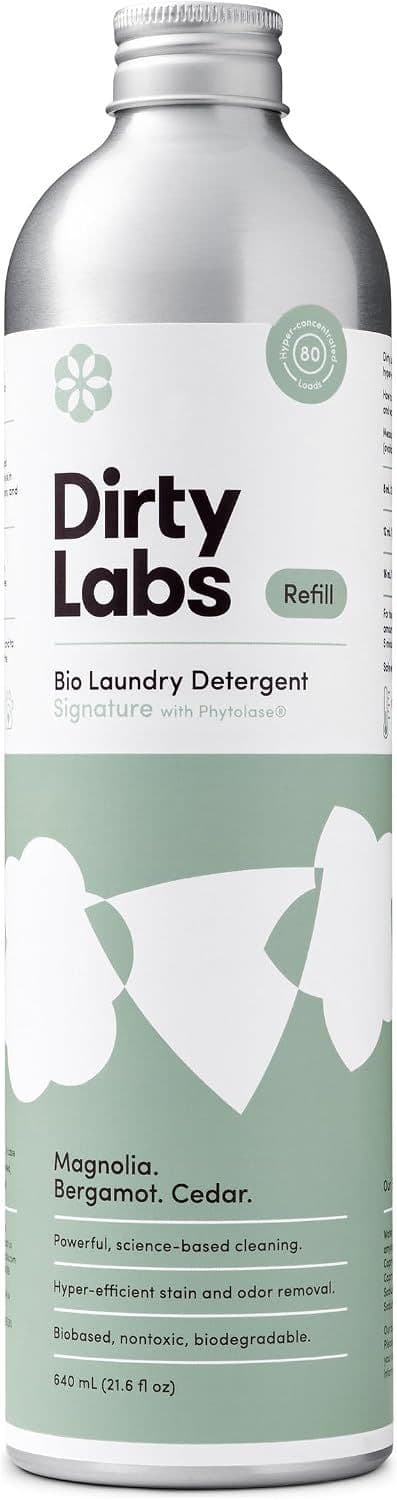
1. For stains and sweat: Dirty Labs Bio Enzyme Free & Clear
Best for targeted bio-enzyme stain removal. It delivers exceptional cleaning performance on tough grime, from workout gear to kids' clothes, in a concentrated liquid made for cold water and HE machines.
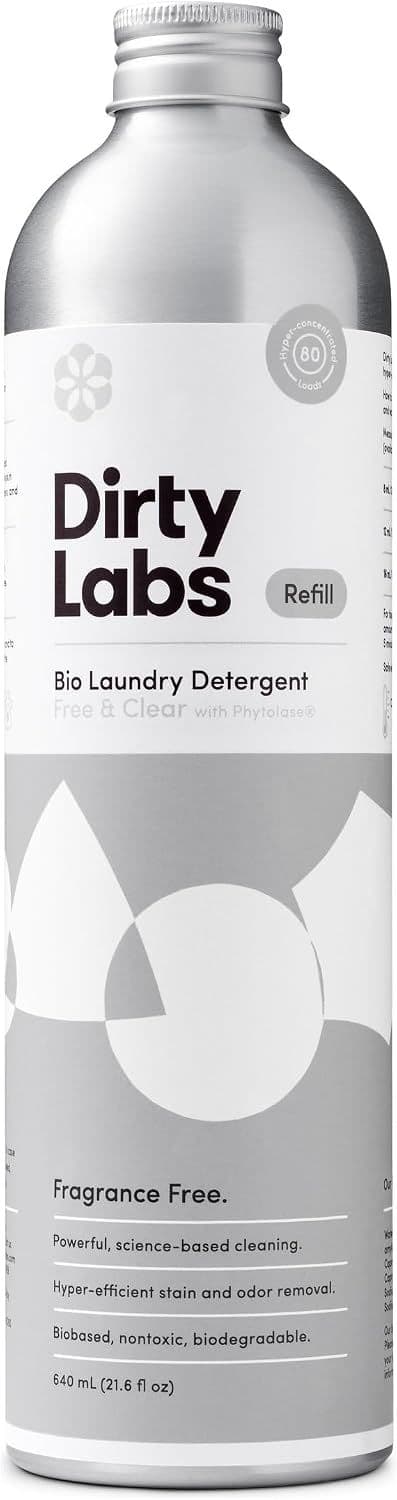
2. For scent you can read: Dirty Labs Signature
The one scented pick on this page. Its scent comes from essential oils named on the label, not an undisclosed fragrance blend, with the same bio-enzyme cleaning approach in a concentrated liquid.
Two picks from one brand is deliberate: you choose scent or no scent without leaving a formula line free of isothiazolinones, optical brighteners, quats and dyes.
3. For certified purity: ATTITUDE Free and Clear
Best for verifiable ingredient purity. EWG Verified and hypoallergenic, this liquid formula uses plant-derived surfactants to clean effectively while remaining gentle on delicate respiratory systems and reactive skin.
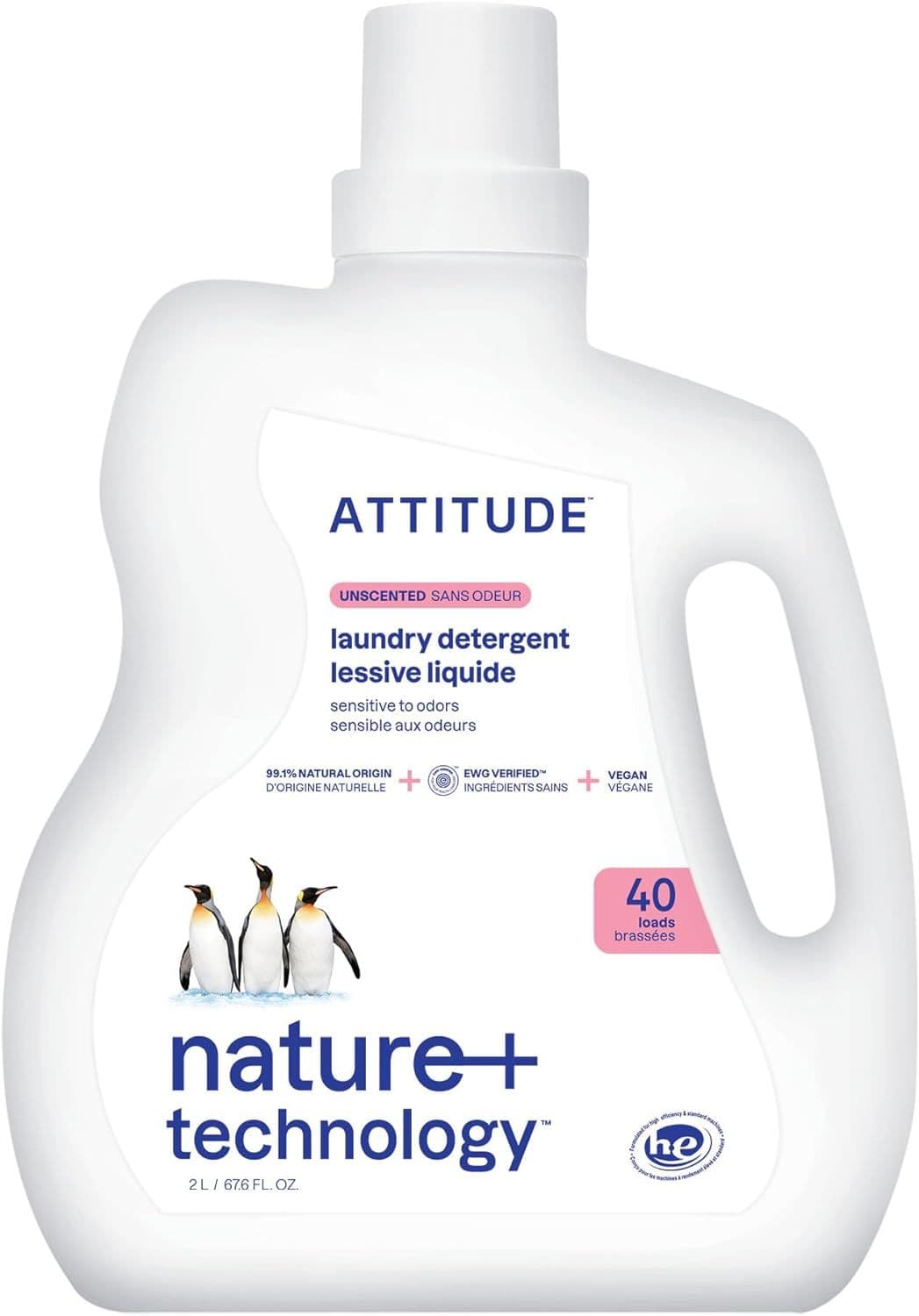
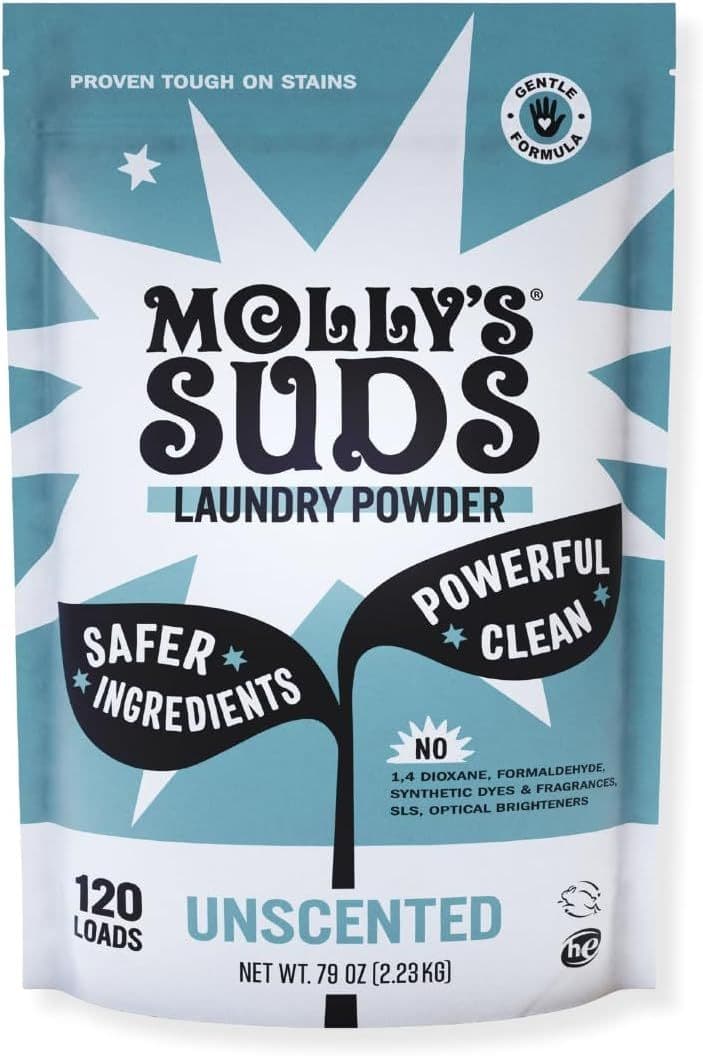
4. For a first, simple switch: Molly's Suds Original Powder
Best for exceptionally sensitive skin and fragrance-free households. The simple formula contains earth-derived ingredients like sodium carbonate and unrefined sea salt, packaged in recyclable materials that skip synthetic preservatives entirely.
As a mineral powder, it ships without water weight and keeps the ingredient list short enough to read at a glance.
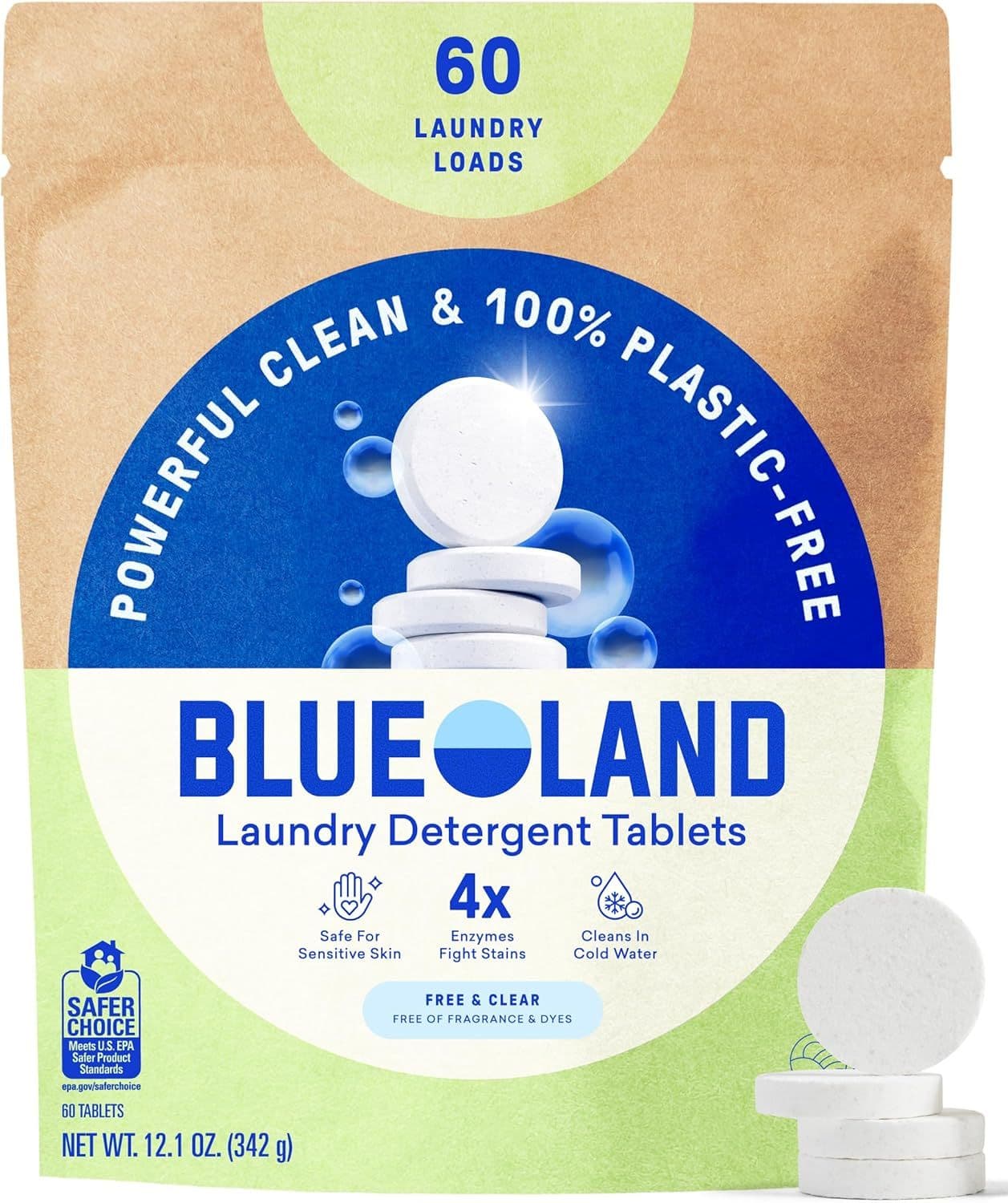
5. For a plastic-free shelf: Blueland Laundry Tablets Free & Clear
A tablet rather than a pod, and the packaging is genuinely plastic-free rather than recyclable-in-theory. It relies on clean enzymes and mineral cleaning agents without harsh residues.
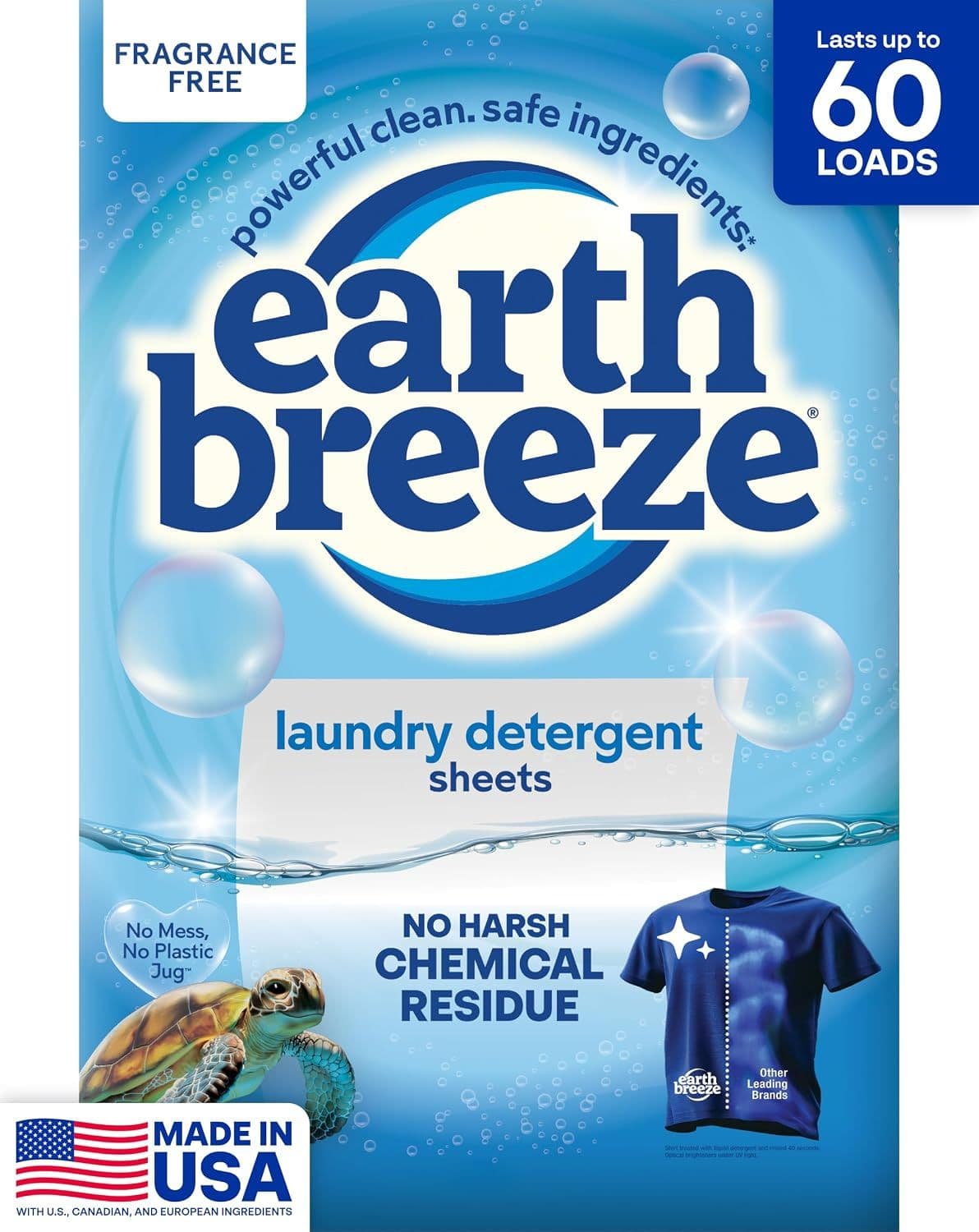
6. For travel and small spaces: Earth Breeze Fragrance-Free Sheets
Laundry sheets prioritize portability and low-carbon shipping, and they dissolve in cold water just as well as warm. Toss one into your gym bag with no measuring and no spills; this version leaves fragrance out entirely.
This guide includes affiliate links. If you buy through them, Holisteek may earn a small commission at no extra cost to you.
What Changes When You Switch
The switch shows up in three places: on your skin, in the air around your dryer and in the way your machine runs.

On your skin
Fewer sensitizers stay in contact with you all day. Old residue is the catch: conventional buildup lingers in woven fibers, so wash what you already own twice and add an extra rinse for the first few weeks.
In the air
The dryer vent study above measured emissions while fragranced laundry products were in use. A fragrance-free load gives the dryer no perfume blend to vent.
In the machine
Concentrated liquids with enzymes are built for cold-water cleaning, and powders and concentrated liquids produce low suds, ideal for high-efficiency machines that require minimal foam.
How to Verify It: EWG Verified, MADE SAFE and Safer Choice
You need verifiable safety signals, not marketing claims. EWG Verified and MADE SAFE certifications do that work for you. They test for contaminants and screen every ingredient against human health and environmental criteria.
A third label, Safer Choice, comes from the US Environmental Protection Agency, whose scientists review every ingredient in a certified product.
| Seal | What it checks | What to look for |
|---|---|---|
| EWG Verified | Zero synthetic fragrance, no optical brighteners and no formaldehyde donors, with every ingredient screened against health databases. | The EWG Verified mark on the bottle, as on ATTITUDE Free and Clear. |
| MADE SAFE | Every ingredient screened against human health and environmental criteria to confirm the absence of known carcinogens and allergens. | The MADE SAFE seal on the label. |
| Safer Choice | Every ingredient reviewed against the program's human health and environmental criteria. | The Fragrance-Free version of the label if your skin reacts to scent. |
A certified seal means the full formula has passed independent review. Without it, you are left reading ingredient lists on your own. That difference matters for anyone managing sensitive skin or trying to reduce their household chemical load.
Six Points to Remember
Marketing terms lack legal standards. Labels like plant-based and biodegradable are unregulated in the United States.
Third-party verification matters. EWG Verified and MADE SAFE certifications screen every ingredient against health databases to confirm the absence of known carcinogens and allergens.
Watch for hidden sensitizers. Synthetic preservatives such as methylisothiazolinone and artificial fragrances remain common triggers for skin reactivity.
Enzymes drive cold-water cleaning. Formulas targeting tough stains require specific bio-enzymes like protease and lipase to break down proteins and fats.
Old residues persist in fabrics. Sensitive skin often reacts to conventional detergent buildup left in woven fibers rather than the new formula itself.
Clear picks by priority. Switching to start, Molly's Suds powder. Switching for performance, Dirty Labs. Switching for certification, ATTITUDE, which is EWG Verified.
Frequently Asked Questions
Explore Holisteek to discover vetted non-toxic essentials and mindful living guides.
Sources
Steinemann, Gallagher, Davis, and MacGregor, Air Quality, Atmosphere and Health, 2011.
US Environmental Protection Agency and National Toxicology Program, classifications of 1,4-dioxane.
New York State Department of Environmental Conservation, limits on 1,4-dioxane in household cleansing products, 2022 and 2023.
American Contact Dermatitis Society, Contact Allergen of the Year: methylisothiazolinone, 2013.
European Union Scientific Committee on Consumer Safety, restriction on methylisothiazolinone, July 2015.
Environmental Working Group, review of quaternary ammonium compounds, 2023.
California Department of Toxic Substances Control, document on quaternary ammonium compounds, 2024.
Get More Wellness Inspiration
Join our community of seekers. Bi-weekly dispatches on holistic science, sustainable living, and hidden wellness gems.

Helena Park
Beauty and longevity writer tracking skincare, recovery culture, and the data-driven approaches shaping women’s health and modern self-care.
Related Articles
Top Wellness Centers in Los Angeles for Holistic Healing
How Did David Beckham’s Wellness Brand Reach $100 Million in Just 11 Months?

Inside Tulah's Sonorium: The Sound Healing Dome Designed to Reset Your Nervous System
Is Kim Kardashian Becoming the New Wellness Kardashian?

What Happens When Longevity Finally Starts Studying Women?

10 wellness spots we discovered in Lisbon

How to Plan a Wellness Retreat Abroad (And Why It's Harder Than You Think)
Precision Wellness: A Smarter Daily Routine
The Best At-Home Wellness Recovery Tools (That Actually Work)