A diffuser turns a room into a mood. But picking the right one is not instinctive. Most buyers fixate on design, then end up with a unit that hums loudly, fades after 40 minutes, or barely scents a small bathroom. That frustration is avoidable.
The real filters are coverage area, runtime, noise output, and how easy the tank is to clean. Once you prioritize those, the choice becomes much clearer. This guide sorts the market by those practical specs, not by packaging claims.
You will find a side-by-side look at ultrasonic and nebulizing technology, a room-size scale that matches capacity to square footage, and a honest breakdown of plastic, wood, and ceramic materials. Each section gives you trade-offs, not just feature lists.
No wellness mythology. No overhyped miracle oils. Just the verifiable numbers and maintenance tips that help you pick a diffuser you actually use, evening after evening, without second-guessing your purchase. That is the only measure that counts in a home wellness tool.
Where is it going?
Tap the closest match. The answer is a tank size, which is the number worth filtering by on any shop page.
Choose Your Space
Option A: A bedside table or a bathroom, under 300 sq ft
Option B: A bedroom or a home office, around 500 sq ft
Option C: An open-plan living area, 800 sq ft and up
Option D: I want scent, not humidity, any size
Recommended Capacity & Models
• Result A (100 to 150 ml): Four to six hours of intermittent mist, enough for a bedside table or a bathroom. Prioritise a sleep mode that turns the lights off, because on a nightstand an LED display is the thing that will annoy you. Our pick in this size is the InnoGear 150 ml.
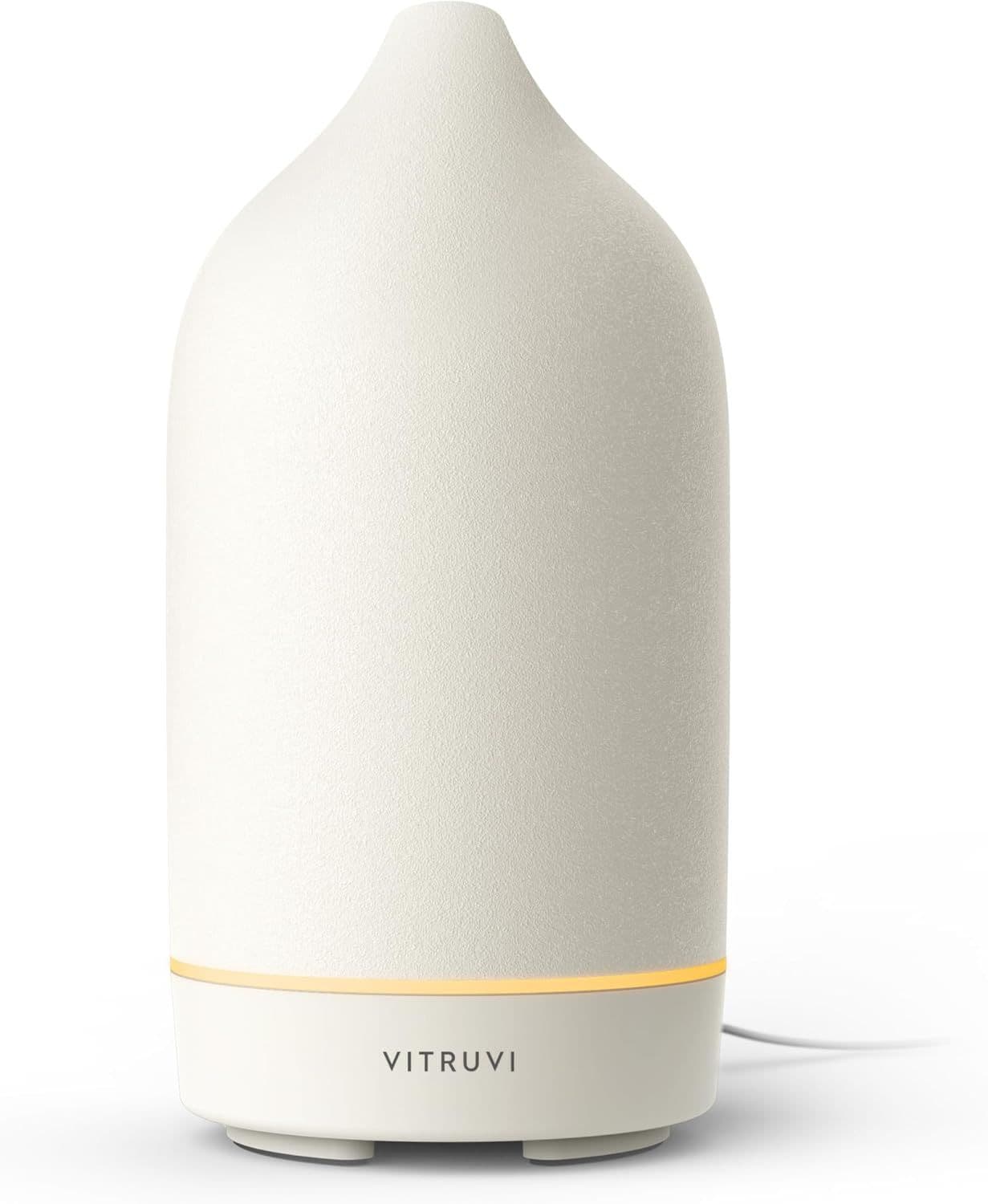
• Result B (300 ml): Eight to ten hours, covering roughly 500 square feet. This is the practical midpoint and where most people should land. If it is going somewhere visible, the Vitruvi Stone sits in this range and looks like an object rather than an appliance.
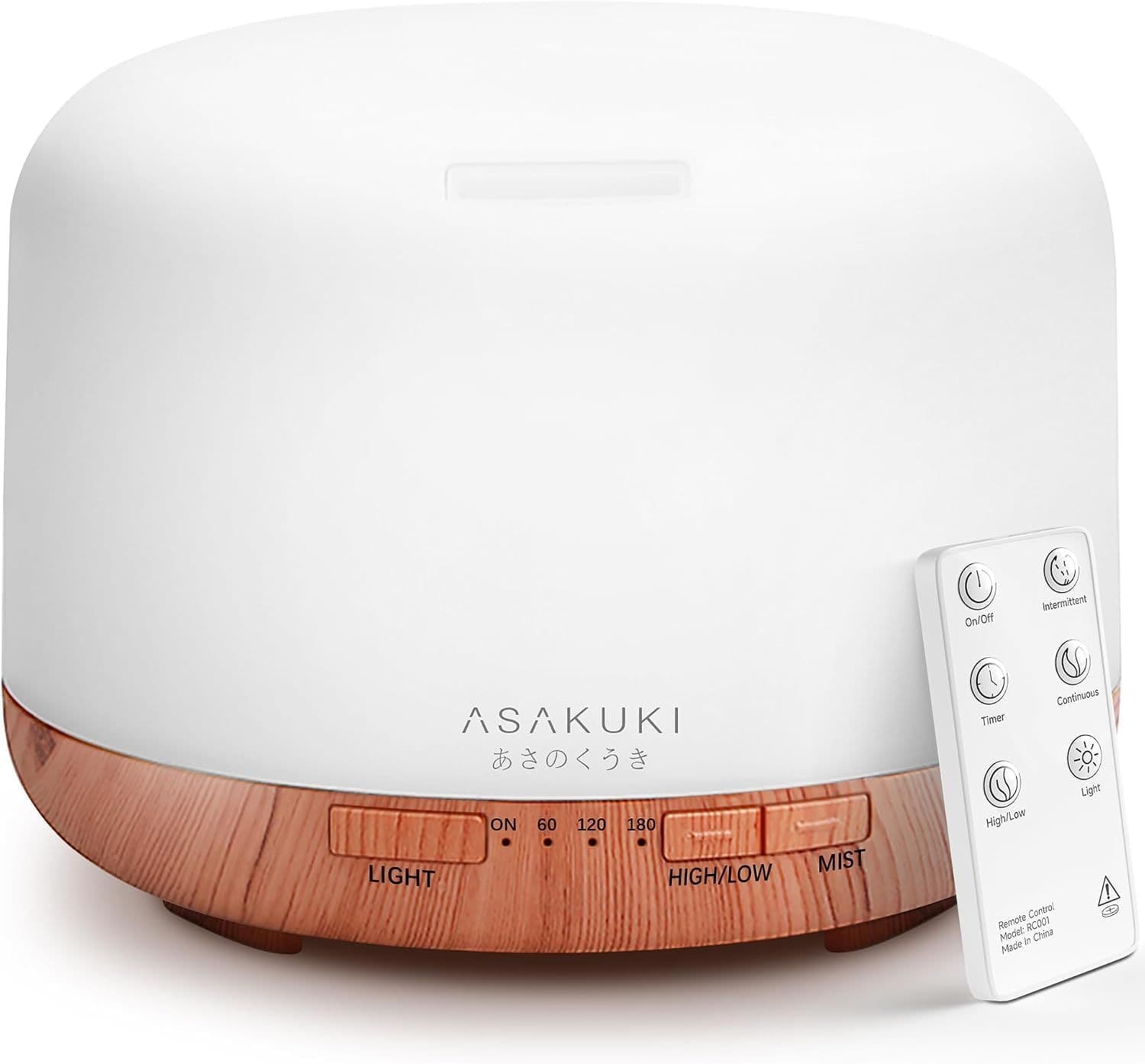
• Result C (500 ml or more): Twelve hours or more, covering 800 to over 1,000 square feet. Runs through a whole night without refilling. The ASAKUKI 500 ml is the straightforward choice, with a tank opening wide enough to clean properly.
• Result D (A nebulizer): Skip tank size entirely. Nebulizers use no water, so they add scent without humidity and throw it much further. The trade-offs are real: an audible pump and noticeably faster oil consumption. The Organic Aromas Raindrop 2.0 is the one to look at.
Ultrasonic vs. Nebulizing: Understanding the Types of Essential Oil Diffusers
Diffuser mechanisms shape how intensely a room is scented, how much oil gets used, and how much maintenance is required.
| Feature | Ultrasonic | Nebulizing | Heat |
|---|---|---|---|
| How it works | Vibrating plate turns water and oil into cool mist | Pressurised air atomises pure oil, no water | Gentle warmth evaporates the oil |
| Scent strength | Soft, gradual | Strong, immediate | Mild |
| Noise | Near silent | Audible pump | Silent |
| Oil used | A few drops | Fast. This is the running cost | Slow |
| Adds humidity | Yes | No | No |
| Best for | Most homes, bedrooms, dry air | Large rooms, strong aroma, no humidity wanted | Budget, small spaces |
Our Picks
Ordered by the room they suit, not by rank. All four are ultrasonic except where noted.
1. Big rooms: ASAKUKI 500 ml
Ultrasonic, BPA-free. The workhorse. Large tank, runs overnight, wide opening that your hand actually fits into. Looks like what it is rather than like decor.
2. On show: Vitruvi Stone
Ceramic, ultrasonic. The one people buy for how it looks, and it earns it. Ceramic body, no visible plastic, no LED display. Smaller tank, so expect to refill.
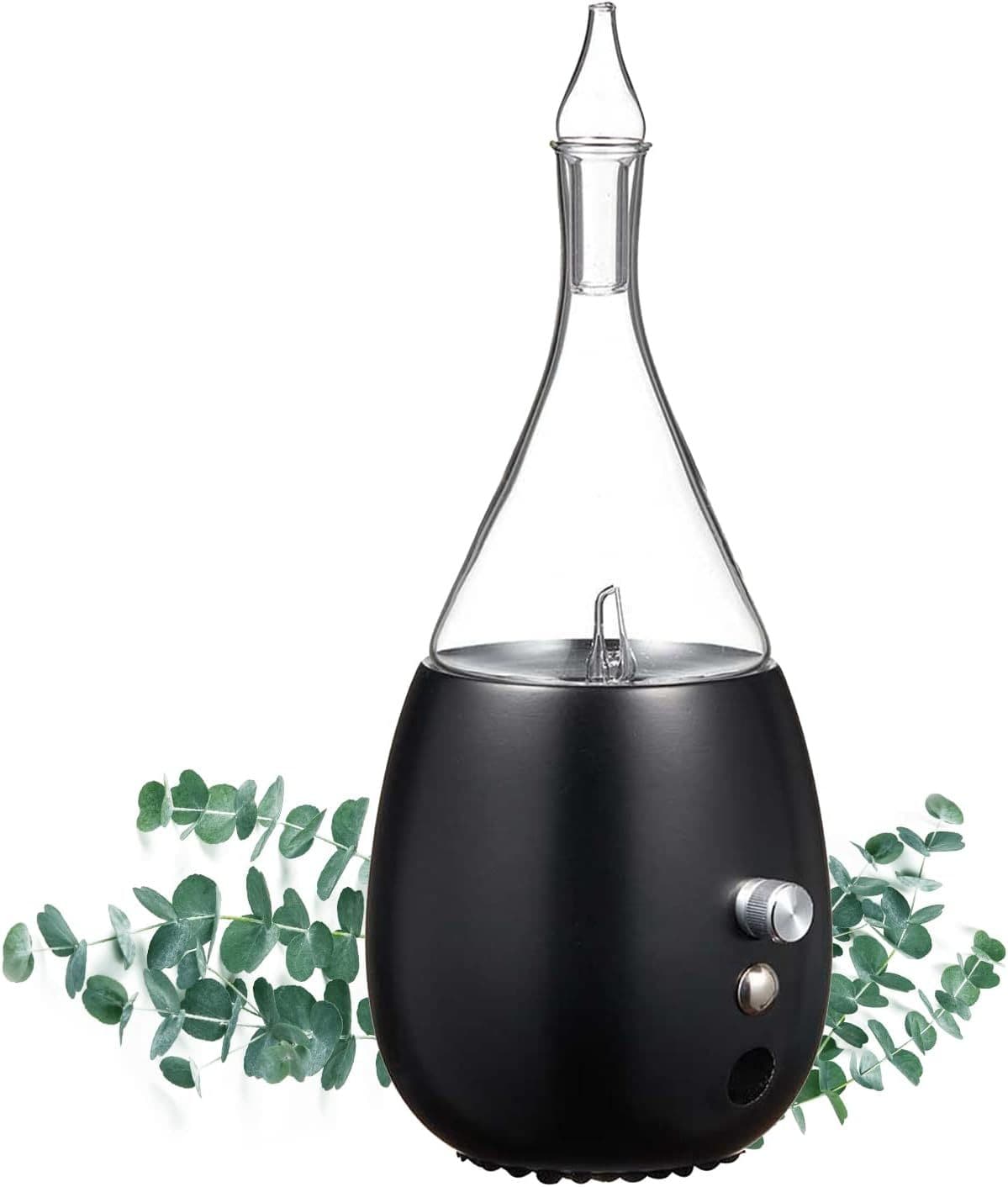
3. Strongest scent: Organic Aromas Raindrop 2.0
Nebulizing, waterless. Glass and wood, no water, pure oil atomised directly. Much stronger throw and no added humidity. It is audible, and it goes through oil quickly.
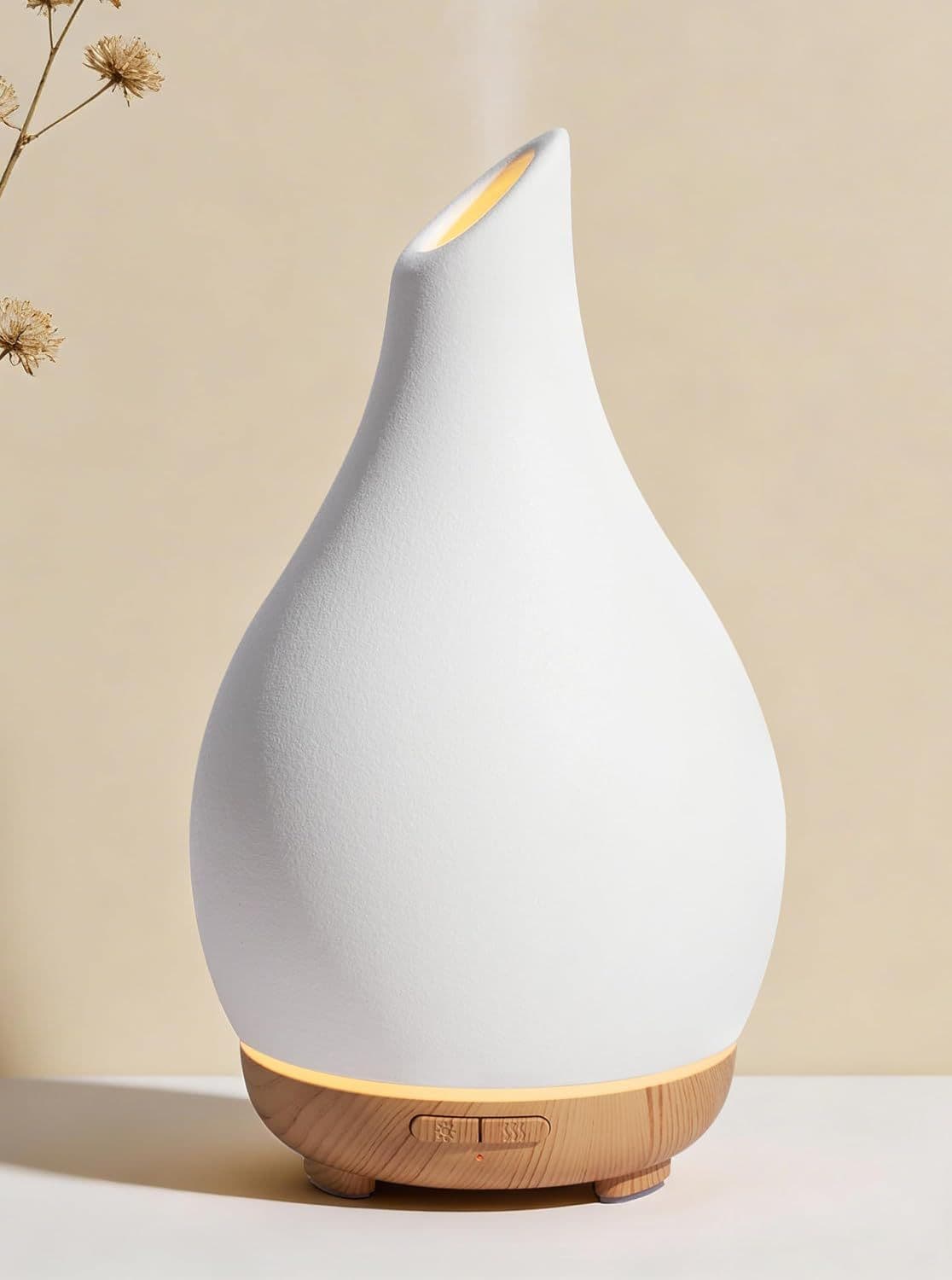
4. Bedside: InnoGear 150 ml
Ultrasonic, wood grain. Small, quiet, with a sleep mode that kills the lights. The sensible first diffuser, and the one to buy if you are not sure you will use it.
Surface & Output: The Essential Performance Checklist
A diffuser is a physical object first. These criteria define your daily experience based on how they directly impact regular use.
• Coverage, in square feet: The manufacturer states it. A 100 ml tank covers up to about 300 sq ft, 300 ml reaches around 500, and 500 ml and above handles 800 to 1,000 plus. Overshooting costs you nothing except refilling less often.
The common mistake: buying for the biggest room in theory rather than the one you actually sit in.
• Runtime, in hours: 100 ml gives 4 to 6 hours on intermittent mist. 300 ml gives 8 to 10. 500 ml runs 12 or more, which is what you need if you want it to last the night.
Check whether the quoted runtime is continuous or intermittent. Intermittent roughly doubles it.
• Noise: Ultrasonic units are near silent. Nebulizers have a pump, so they are audible. If it is going on a bedside table, this is the spec that decides whether you keep it there.
Rarely stated in decibels. Reviews mentioning sleep are the more reliable source.
• The size of the tank opening: The least glamorous spec and the one that determines whether you clean it. If your hand does not fit inside to wipe the reservoir, you will not do it weekly, and output drops within months.
Narrow-necked glass looks beautiful and is the hardest to maintain.
Some units produce a whisper of vapor. Others fill the room within minutes. Expect the output spec to be clearly stated. Ask if the reservoir mouth is large enough for your hand to reach inside and wipe clean.
Coverage and Capacity: A Room Size Scale
Moving up, a 300 ml unit reaches roughly 500 square feet. This handles a master bedroom or home office with a steady 8 to 10 hour run time. It is the practical midpoint for most spaces.
For open floor plans, a 500 ml or larger tank is the honest requirement. These cover 800 to over 1,000 square feet. They run 12 hours or more, often through the night. Choose based on the room, not the list price. Overshooting capacity just means you refill less often.
Materials Matter: Plastic, Wood, and Ceramic Trade-offs
Diffuser materials affect durability, scent purity, and how the unit looks on a shelf. Each option has a clear trade-off.
| Material | What you get | What you give up |
|---|---|---|
| BPA-free plastic | Light, cheap, survives being knocked over, easy to wipe | Absorbs strong oils over time, and looks like an appliance |
| Ceramic | Holds scent cleanly, feels substantial, doubles as decor | Cracks if it falls, usually a smaller tank |
| Wood | Warm, hides water marks better than glossy plastic | Unfinished bases warp if left damp |
| Glass | The purest scent path, easy to sterilise, best for switching oils often | Heavy, and narrow necks are awkward to clean |
Care & Maintenance: Keeping Your Mist Clean
A diffuser that isn't cleaned regularly loses output, spreads bacteria, and shortens the lifespan of the ultrasonic diaphragm. The fix is simple and takes minutes.
Empty it after every use. Standing water is where mould starts, faster in a warm room. Tip it out and wipe the tank dry.
Vinegar once a week. Half fill with water, add a tablespoon of white vinegar, run it five minutes, drain, wipe, dry fully. This is what keeps the ultrasonic plate working.
Keep carrier oils out of it. Jojoba, coconut and other thick oils clog the plate and the nozzle. Pure essential oils only.
Run it in sessions, not all day. Thirty minutes to two hours, or use the intermittent setting. Your nose stops registering a scent it is bathed in continuously, so constant running mostly wastes oil.
This guide includes affiliate links. If you buy through them, Holisteek may earn a small commission at no extra cost to you.
How to Decide: Matching the Diffuser to Your Routine
Your Space: Match the diffuser's coverage to the room. A small bedroom needs less output than an open-plan living area.
Your Priorities: A nebulizer delivers the most potent, therapeutic-grade aroma. An ultrasonic unit runs quietly and adds humidity. Choose the technology that fits your daily rhythm.
Your Budget: Basic plastic models with simple timers are affordable and functional. Wood and ceramic designs cost more, but they can serve as a centerpiece. Expect a higher price for extra features like auto-shutoff or LED lights.
Reflect on where you will use it most, what you want to experience, and what you are willing to invest. This honest assessment will guide you to the diffuser that earns its place in your intentional space.
How Diffuser Placement Affects Scent Throw and Saturation
Where you put it changes what you smell. Positioning decisively shapes how the aroma fills the room, from air current lift to moisture pooling.
Roughly chest height, with clear air above it. The mist lifts into the room's own air currents instead of pooling.
High shelf spreads scent wide as the mist falls. Good for open-plan.
Low table or floor concentrates it in a tight radius. Good beside a reading chair or a bed, slow to reach the rest of the room.
Not in a corner boxed in by tall furniture. The mist gets trapped and leaves moisture on nearby surfaces.
Away from vents, fans and open windows. Airflow breaks up the mist column before it saturates anything.
The Short Version
Tank size is the spec that matters most. 100 ml for a bedside, 300 ml for a bedroom, 500 ml and up for open-plan.
Ultrasonic suits almost everyone: quiet, gentle, adds humidity. Nebulizing is for strong scent with no water.
Check the opening is wide enough to get your hand inside, or you will never clean it.
Empty after each use, vinegar once a week. That is the whole maintenance routine.
Run it in sessions of thirty minutes to two hours. Continuous running wastes oil, because your nose adapts.
Chest height, clear air above, away from vents.
Match the diffuser to the square footage you actually use, not the largest room in theory. A smaller, quiet ultrasonic essential oil diffuser with a timer often fits daily routines better than a feature-heavy device. This is where a practical checklist beats a long feature list. Browse the Holisteek shop when you are ready to compare curated options.
Más inspiración para tu bienestar
Únete a nuestra comunidad de buscadores. Cada dos semanas, novedades sobre ciencia holística, vida sostenible y joyas ocultas del bienestar.

Luz Altamira
Editora enfocada en longevidad, salud femenina y hábitos sostenibles para una vida más equilibrada.
Artículos relacionados
Top Wellness Centers in Los Angeles for Holistic Healing

How Did David Beckham’s Wellness Brand Reach $100 Million in Just 11 Months?

Inside Tulah's Sonorium: The Sound Healing Dome Designed to Reset Your Nervous System

Is Kim Kardashian Becoming the New Wellness Kardashian?

What Happens When Longevity Finally Starts Studying Women?

10 wellness spots we discovered in Lisbon

How to Plan a Wellness Retreat Abroad (And Why It's Harder Than You Think)
Precision Wellness: A Smarter Daily Routine
The Best At-Home Wellness Recovery Tools (That Actually Work)